Madison, Wisconsin

October 1981

Dear

I am with Jean in the waiting room doing crossword puzzles, reading the paper, and getting hungry! Bill got off in the rain and fog yesterday – called last night to say he’s in Washington ok. We saw Steve at the airport. He came up for the homecoming weekend in Madison.

Love, Dede

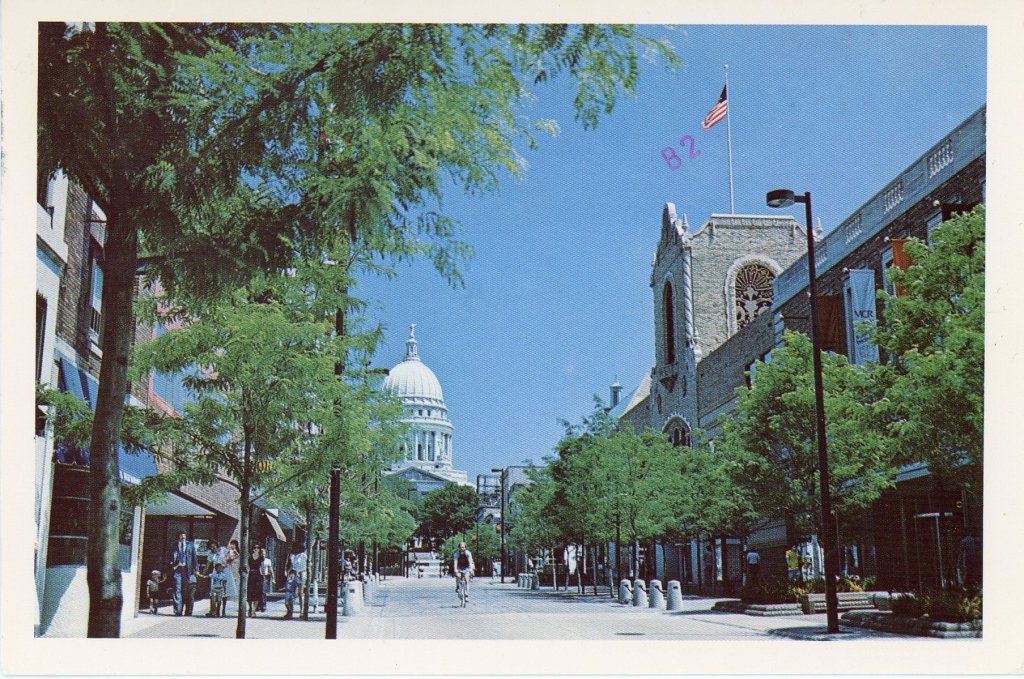
State Street Mall – Civic Center, Madison, Wisconsin. Looking toward the State Capitol

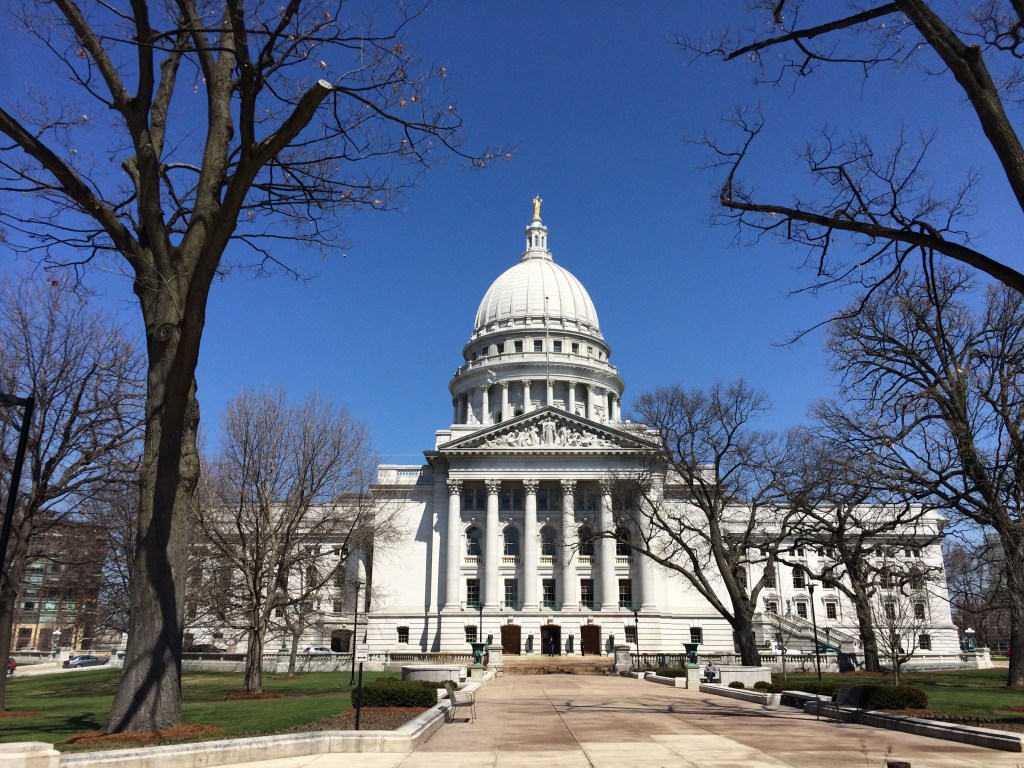
The Capital building in Madison, Wisconsin, was completed in 1917.  The architect was George Post of New York and it cost $7.25 million to build.  It is 284 ft, 5 in. to the top of the dome, three feet shorter than the capital building in Washington, DC.

The white granite on the outside is from Vermont and makes the dome the only granite dome in the United States.  It is the also the largest dome by volume in the United States and one of the largest in the world.  Inside the rotunda there is marble from Greece, Algeria, Italy and France; limestone from Minnesota; red granite from Wisconsin.

It was designated a National Historic Landmark in 2001

The statue on top of the dome is a sculpture by Daniel Chester French. He also did Abraham Lincoln of the Lincoln Memorial in Washington DC. It is called “Wisconsin” and is a woman dressed in Greek fashion with an arm reaching out to symbolize the state motto – Forward. There is a badger on top of her helmet and she holds a globe with an eagle on top in her left hand. The eagle has a “W” on its chest.

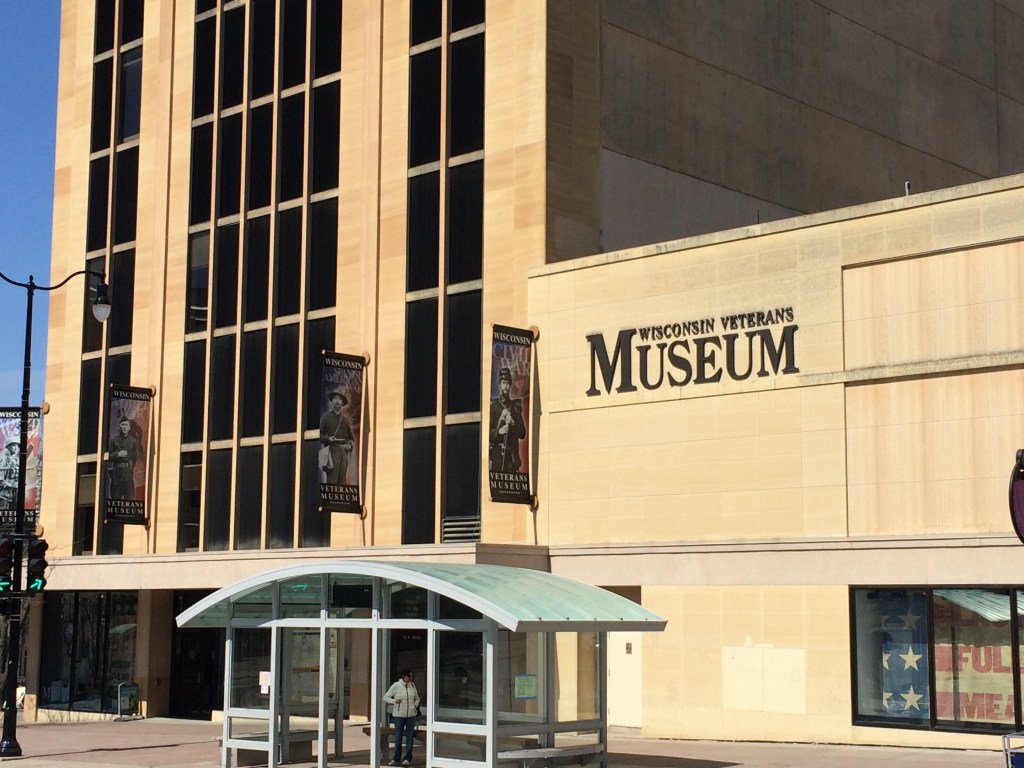
The square surrounding the capital holds the farmer’s market every weekend, weather permitting, as well as three museums, a gourmet cheese shop and several restaurants. The Children’s Museum, the Wisconsin Veterans Museum and the Wisconsin Historical Museum are all on the square. The Veterans Museum is especially interesting. It takes you through the wars Wisconsin citizens have participated in over the past 150 years and includes many personal artifacts and souvenirs.
Ibadan, Nigeria

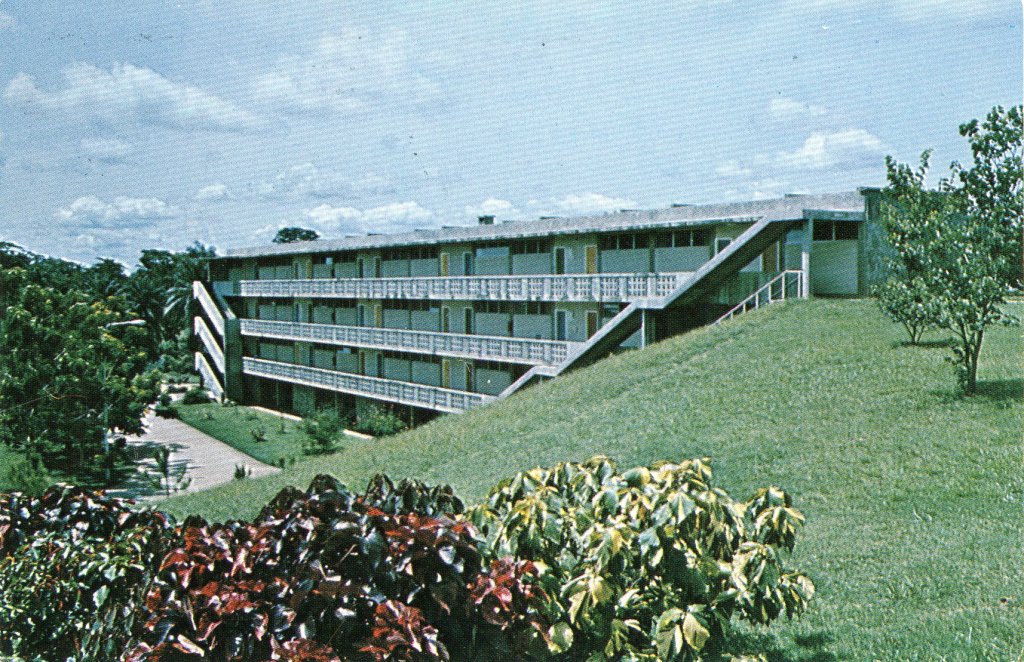
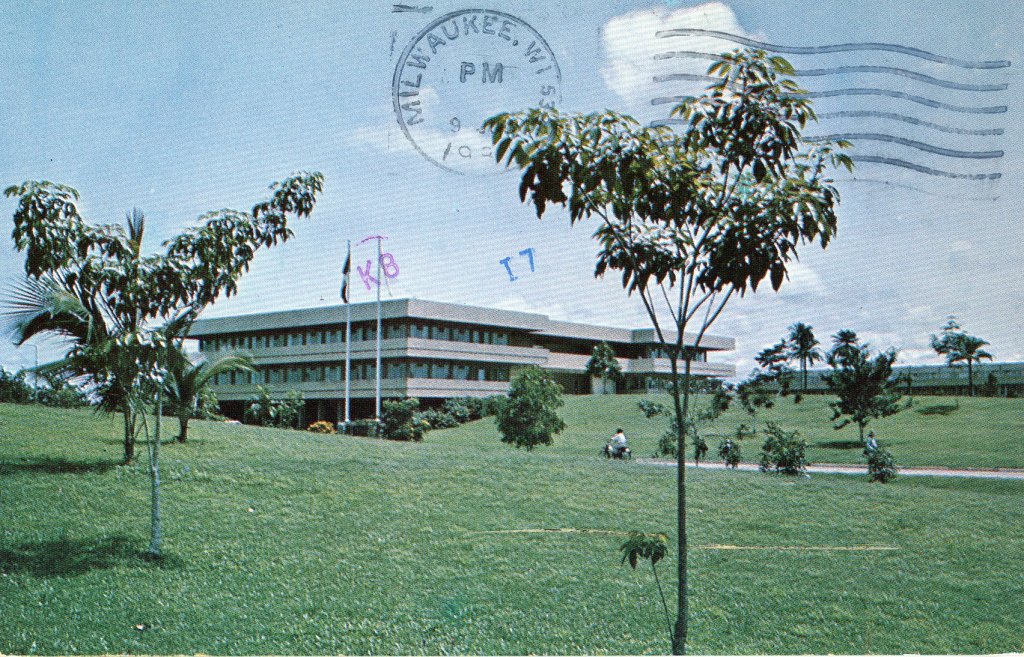
International Institute of Tropical Agriculture (IITA), Ibadan, Nigeria. “

“IITA is an award-winning, research-for-development (R4D) organization, providing solutions to hunger, poverty, and the degradation of natural resources in Africa. Since 1967, IITA has worked with international and national partners to improve livelihoods, enhance food and nutrition security, increase employment, and preserve natural resource integrity.”

My family lived at IITA from 1975 to 1980. Above is a close-up of one of four residence halls with rooms or flatlets for post-doctoral and research fellow and training participants at the International Institute of Tropical Agriculture, Ibadan, Nigeria. (1980)

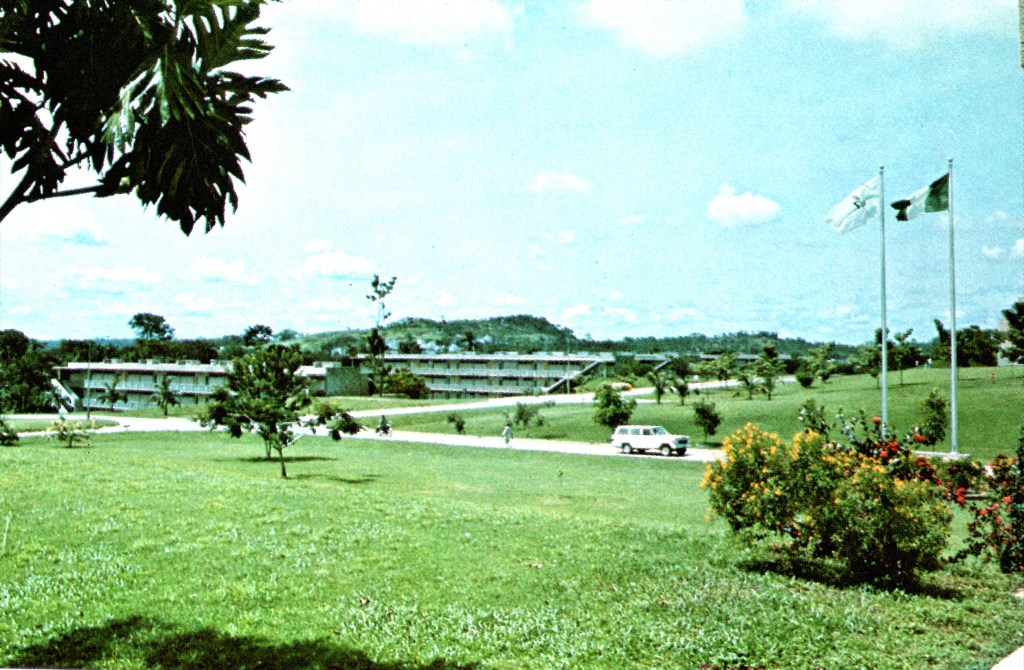
Above is F.F. Hill Hall, the administration building of the International Institute of Tropical Agriculture, Ibadan, Nigeria. (1980)

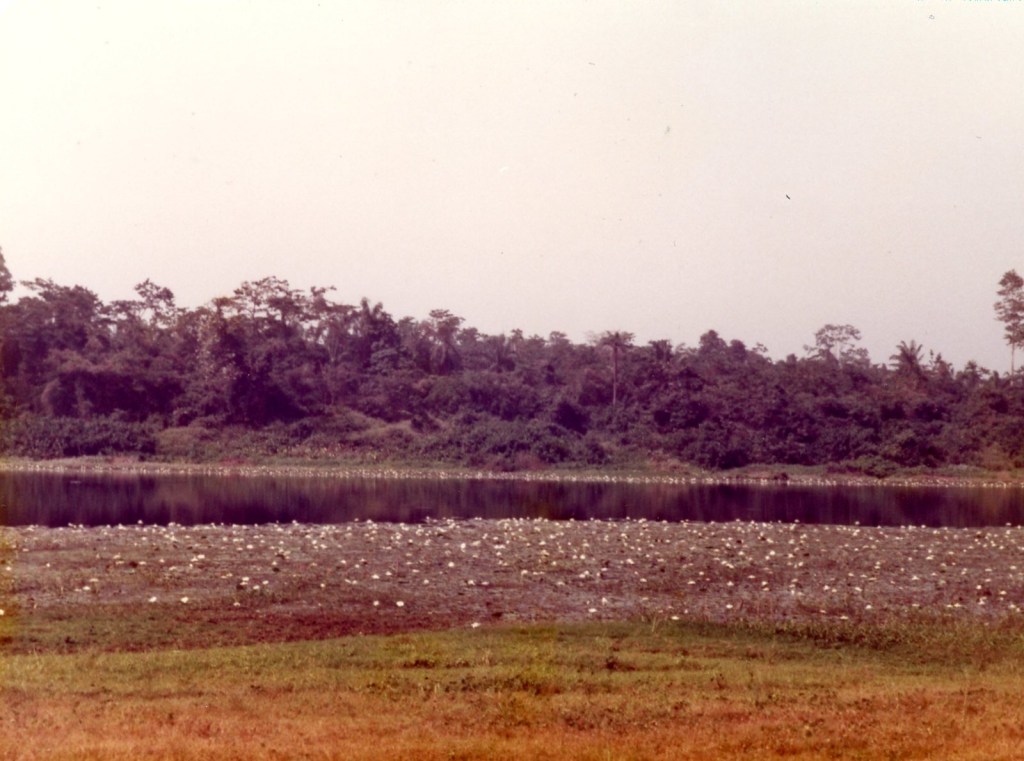
F.F. Hill Hall, the administration building at the International Institute of Tropical Agriculture, Ibadan, Nigeria is surrounded by gently rolling lands, adding to the beauty of the tropical landscape. (1980)

Victoria Falls, Zambia

Eastern Cataract in flood. Victoria Falls, Zambia

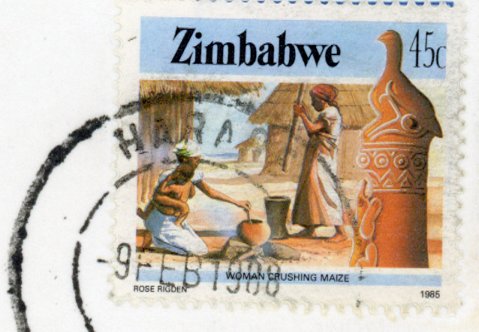
Zimbabwe, Feb 1988

Dear

All going well. I gave my presentation this morning and it went OK. I’ve been active with the sub-group with which I work and we have the China trip finalized. We’ll be at Victoria Falls this weekend. Ruth is here but there isn’t much for spouses so I think it OK that you didn’t come.

Love, Bill

Back in the USA, What’s next?

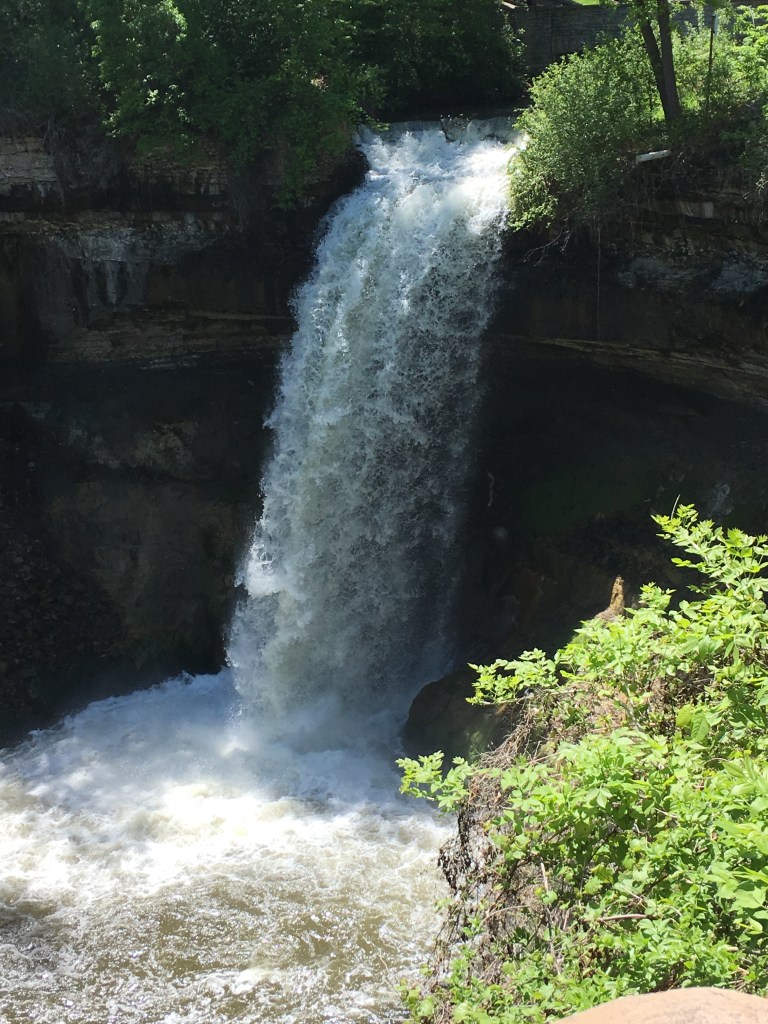
Minnehaha Falls

A little over a week ago I was in Cairo. Egypt. It seems like a lifetime ago. So far away. It was a fabulous trip. The weather was not hot but it was above zero every single day. A big improvement from where I am now.

This past week has not been the greatest. I spilled a full glass of water on my printer. My two year old oven range abruptly stopped working in the middle of cooking my dinner. And, I broke a water glass in the dishwasher. If this continues, I’m not sure this is going to be the best year, even after a trip to Egypt.

It makes me long for my next global adventure. Between Covid and the looming invasion of Ukrane, the world does not seem that inviting. However, always the optimist, I am starting to plan for Chile. I want to drive the Carretera Austral, the Southern Highway. I guess most people start at Puerto Montt and go south to O’Higgins. Apparently Bernardo O’Higgins is considered the liberator and father of Chile. Wonder where he came from…

Anyway, it is a beautiful area full of national parks, lakes, and mountains. Has anybody been? I would love to hear about it.

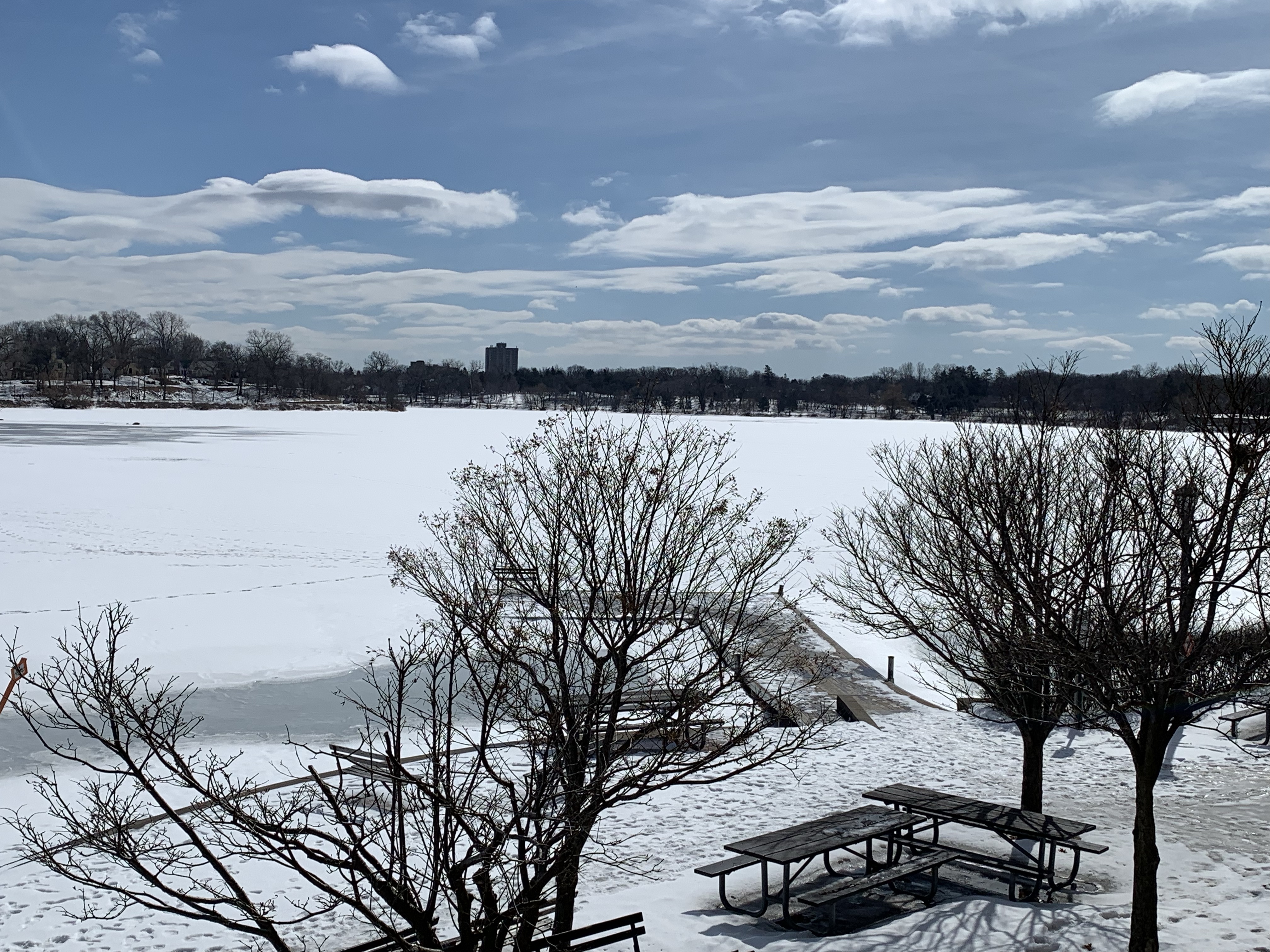
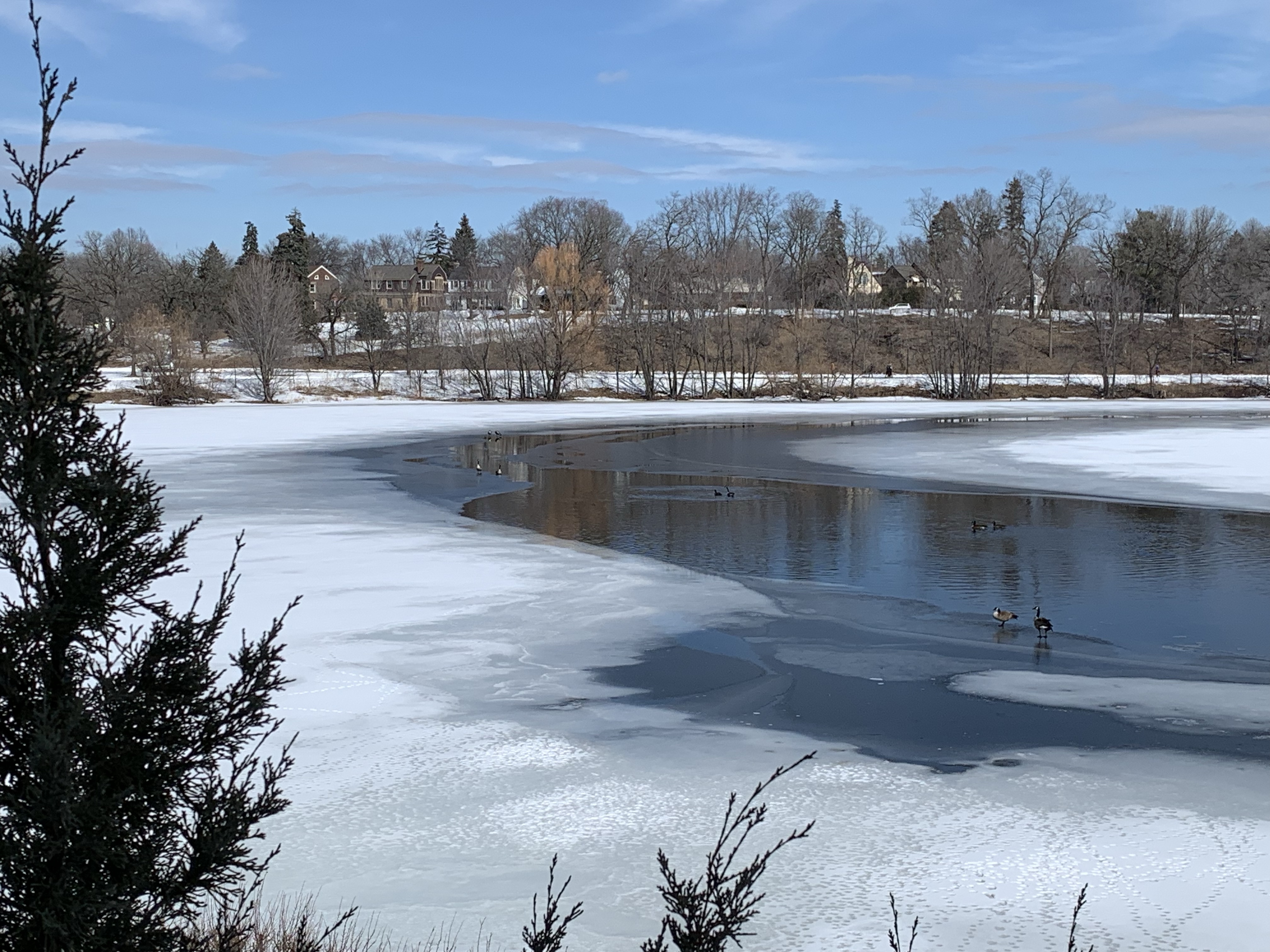
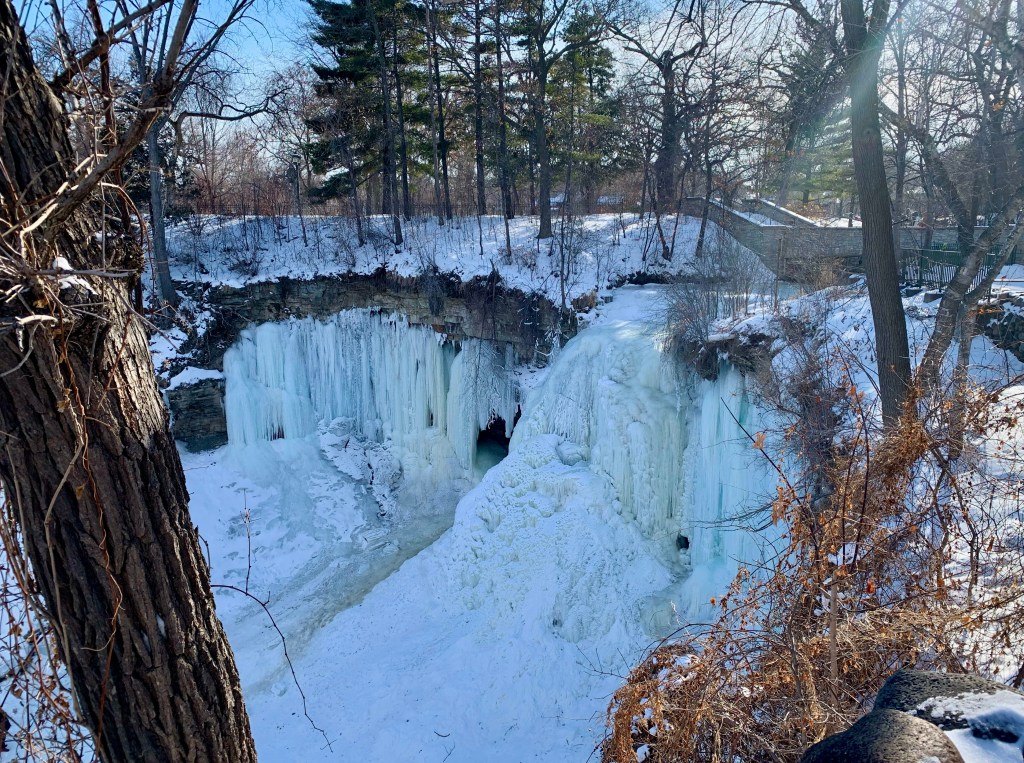
I will leave you with a photo of the above waterfall in its natural state.

Egypt, Our Last Day

Not much to say, really.

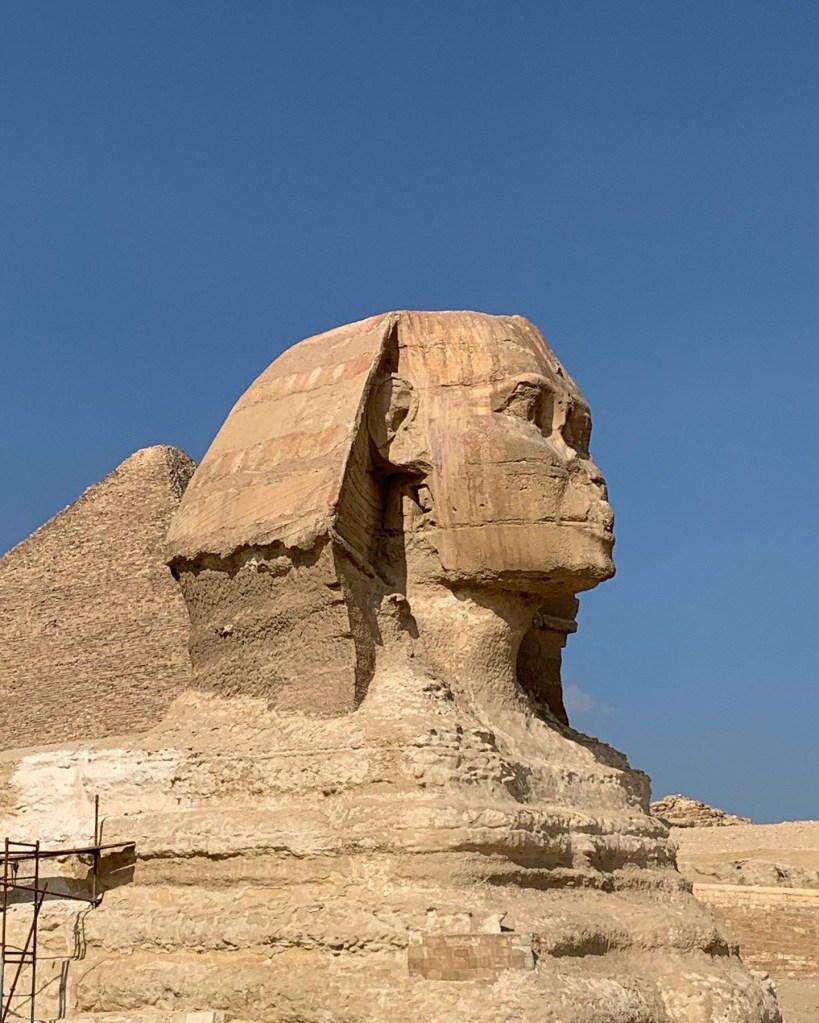
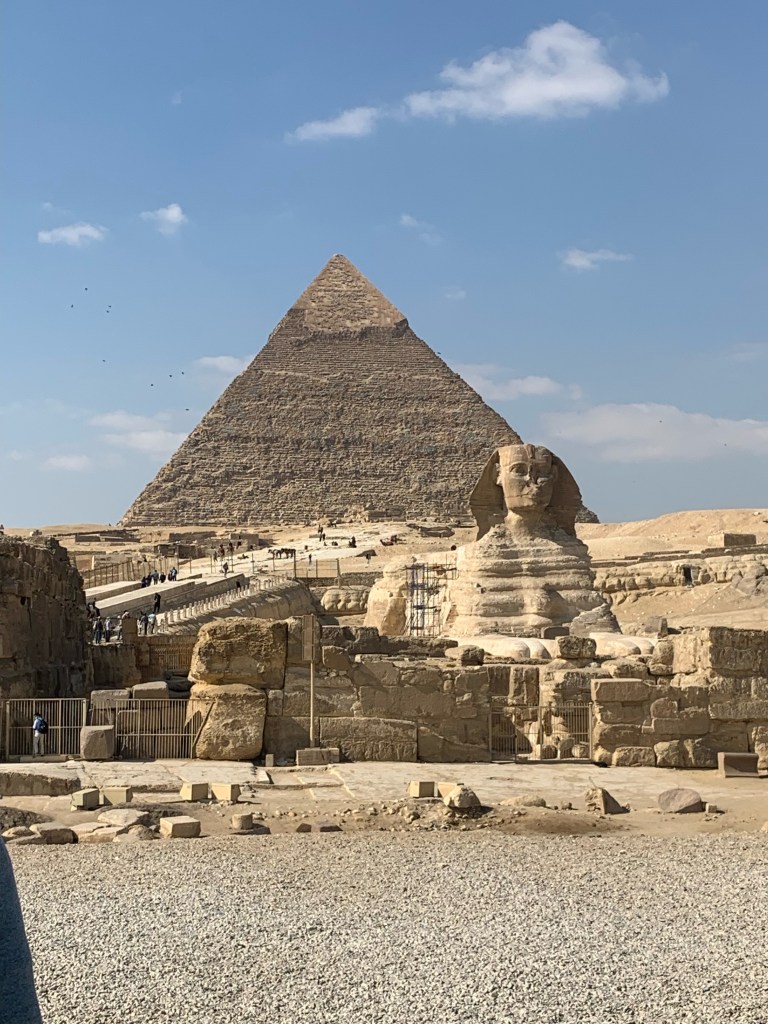
One comment. The Sphinx was smaller than I had imagined. But otherwise my expectations were met.

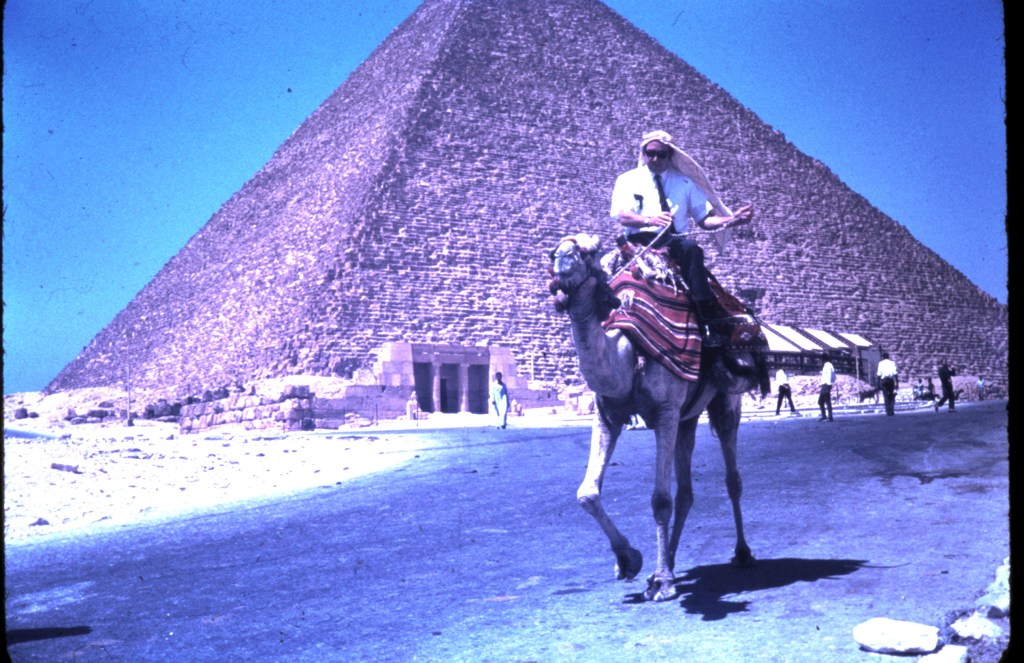
Fifty years ago my father visited Egypt and went to Giza and rode a camel. My son went with me on this trip and my father told him he should ride a camel. We tried to re-create the scene.

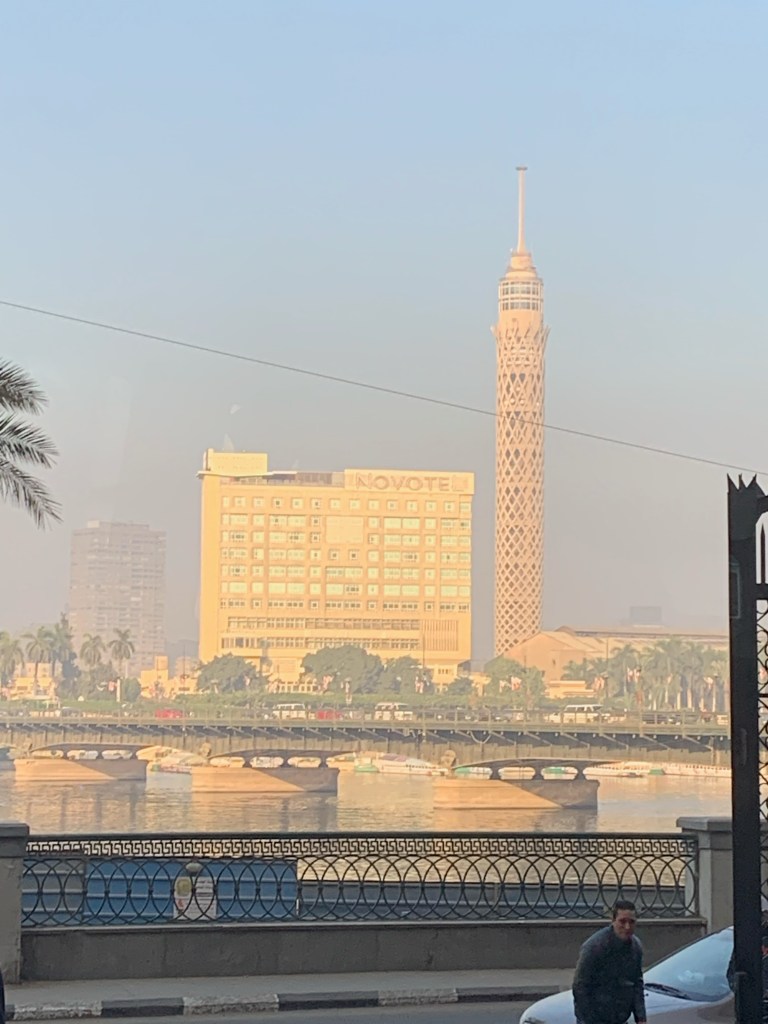
Back into Cairo. Cairo had really bad smog. A city of over 20 million people. Big noisy smoggy dirty. But not as dirty as I expected. Actually, pretty clean. No open sewers, no piles of trash, no stench. Quite nice, really. In the evening I met up with an old friend I hadn’t seen in ages. He has lived in Cairo for 40 years and loves it. I have to admit, I’m a bit jealous. If you haven’t been there, I highly recommend it. I think I need to go back sometime…

That morning on our way to Giza, we stopped in a parking lot across from the Pyramids to rendez-vous with a physician. He diligently swabbed all of us and went off to do our Covid tests. This was required for us to re-enter the USA. Later that afternoon I received an email with my official document, photo and all, proclaiming I did not have Covid. That was a relief. On the way out of Egypt, the airlines did check to see I had the document but on returning to the homeland, nobody even mentioned it. All they looked at was my passport.

Agra, India

January 2010

Dear

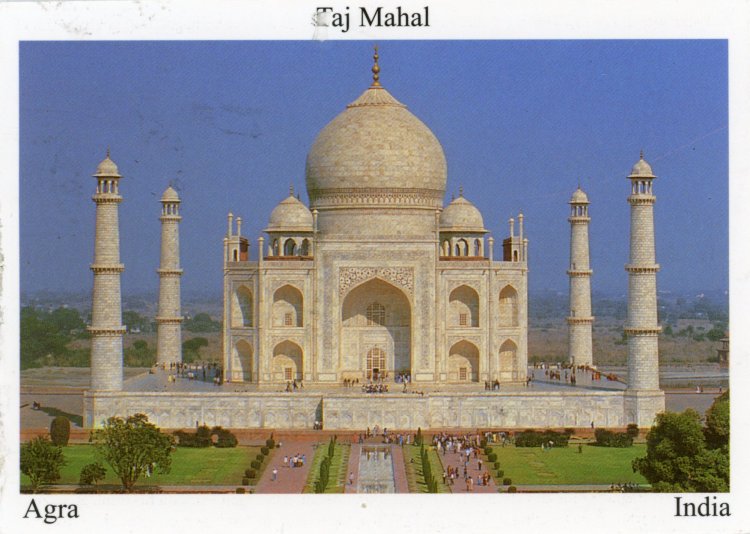
Happy New Year! We are having a great time in India. It is definitely an adventure here, you never know what is going to happen tomorrow. The Taj Mahal was amazing. Stunning from every angle and so peaceful compared with all the people and honking on the street and sidewalks.

Love, Kelly

Pretty much everybody has been to the Taj Mahal but me.

Here is a photo my father took in the early 1950’s.

Egypt Part Four: Valley of the Kings

Indiana Jones in the Valley of the Kings, pyramid shaped mountain in background

It was about a half hour drive from our ship to the Valley of the Kings. We saw agriculture and street scenes along the way.

Our first stop was a photo op at the statues of Amenhotep III and the Collossi of Memnon. These originally guarded the mortuary temple of Amenhotep III. They were damaged by earthquakes in 1200 BC and 27 BC.

Amenhotep III and the Collossi of Memnon

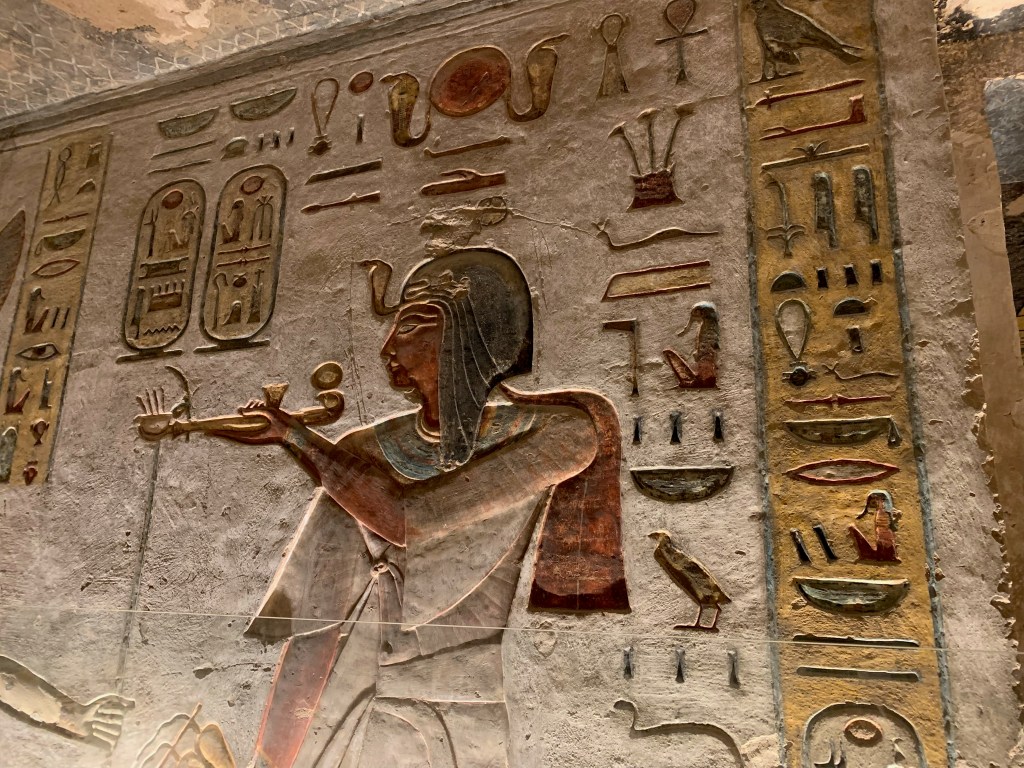
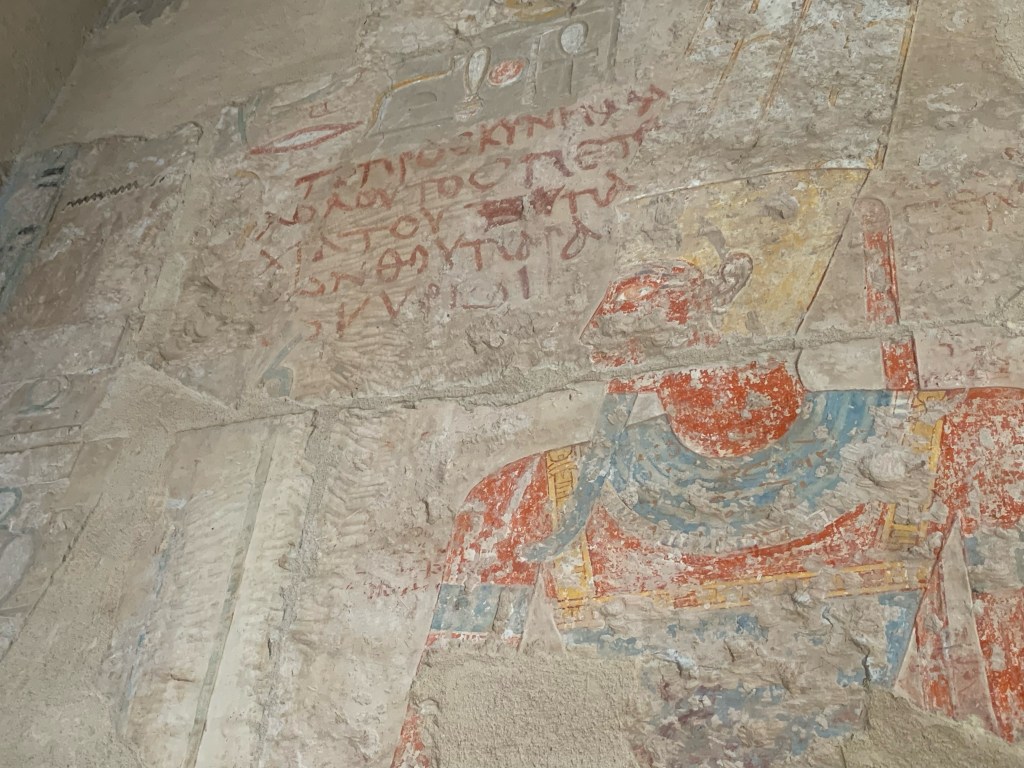
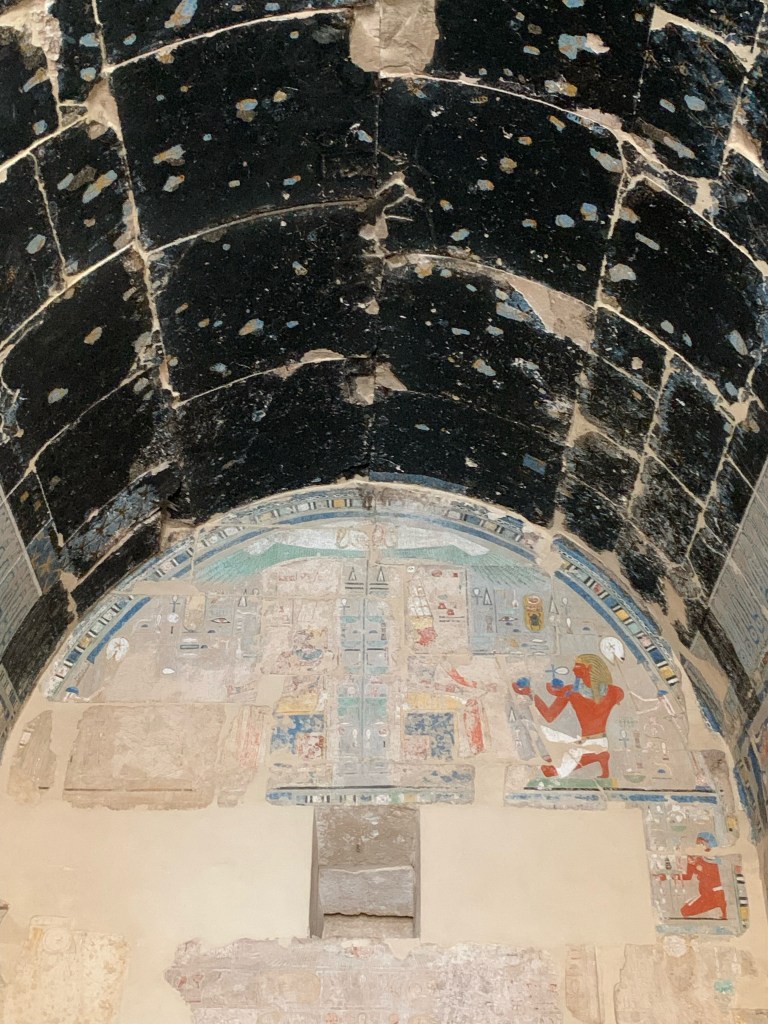
We wound up the hill into the valley where the tombs were hidden. One reason they picked this area was the mountain was naturally shaped like a pyramid as you can see above. Only twelve of the 63 discovered tombs are open to the public at any given time and they alternate as they are worked on and restored. We saw four of them. The whole area was still being actively excavated. Some tombs were in better shape than others. King Tutankhamun’s tomb was the only one that still had a mummy in it and it will be moved soon. It is hard to describe the experience, it was beyond beautiful, so amazing to think how old they are.
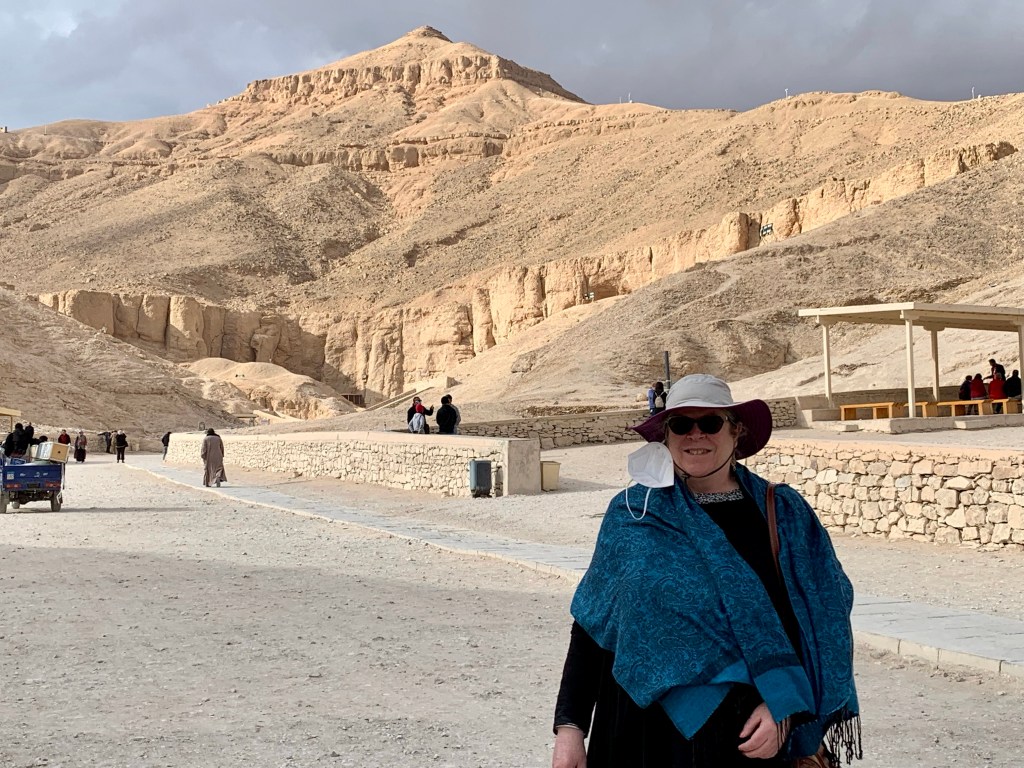
I read all the Amelia Peabody books by Egyptologist Barbara Mertz aka Elizabeth Peters, that span the time from 1884-1923. She wrote 20 books based in Egypt mostly about archeologists digging around and solving mysteries. As I read them, I kept trying to imagine what the Valley of the Kings actually looked like back then, or even now. All I could imagine was a vast desert with nothing much else. Well, now I know. Take a look.

On the other side of the mountain, facing Karnak, was the Mortuary Temple of Pharoah Hatshepsut. Hatshepsut’s reign started roughly around 1500 BC and she was on the throne for 22 years. She ruled as a Pharaoh, presenting herself as male, wearing a false beard. She was an important figure. Her mortuary temple was where they prepared her body to be buried in the Valley of the Kings. It was an impressive structure built into the cliffs and directly opposite the Eighth Pylon, her addition to the Karnak site. It had three terraces with shrines to Hathor, Anubis, and Amun.

Then it was back to the ship for lunch and off to the airport. Return to Cairo.

Next: Giza and the Pyramids

Egypt Part Three: Karnak and Luxor

We docked in Luxor about lunchtime. We were tied to another ship so we had to walk through that one in order to get onto land. We could see in some places the ships were four or five deep. In the afternoon we set out for Karnak on the east bank of the river. In old Egypt, the east side of the river was associated with life as the sun rises in the east. The west side of the river was associated with death as the sun sets in the west. Therefore, generally, temples were built on the east side and tombs were on the west side. In Luxor, the Temples of Karnak and Luxor are on the east side and the Valley of the Kings is on the west side.

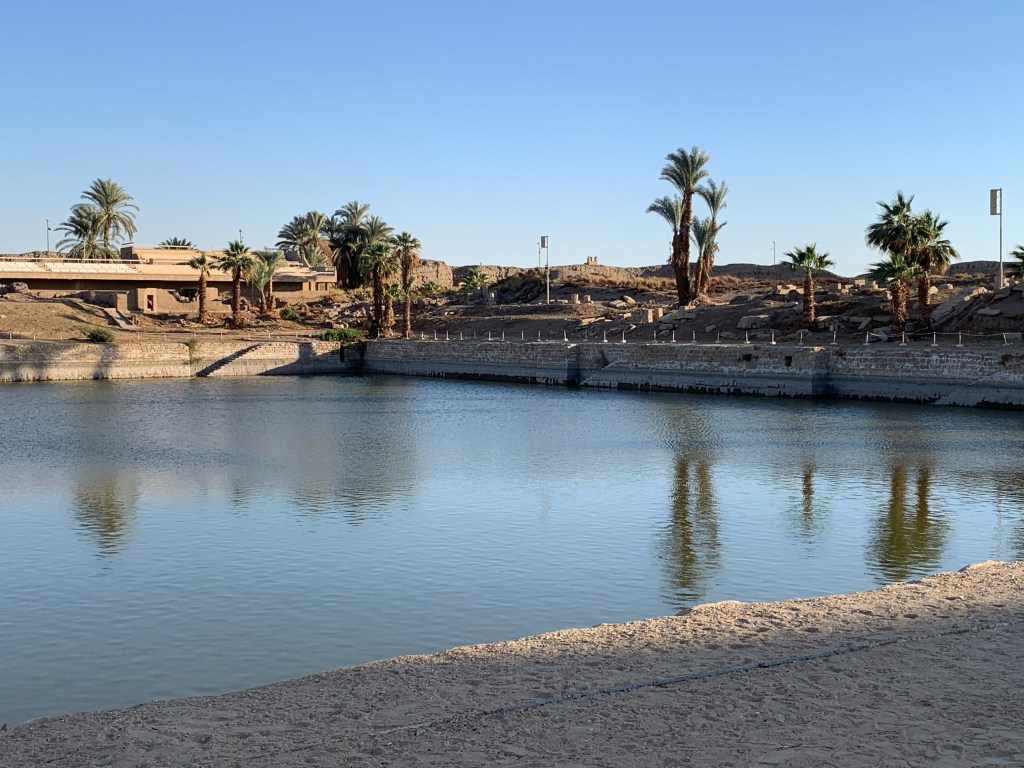
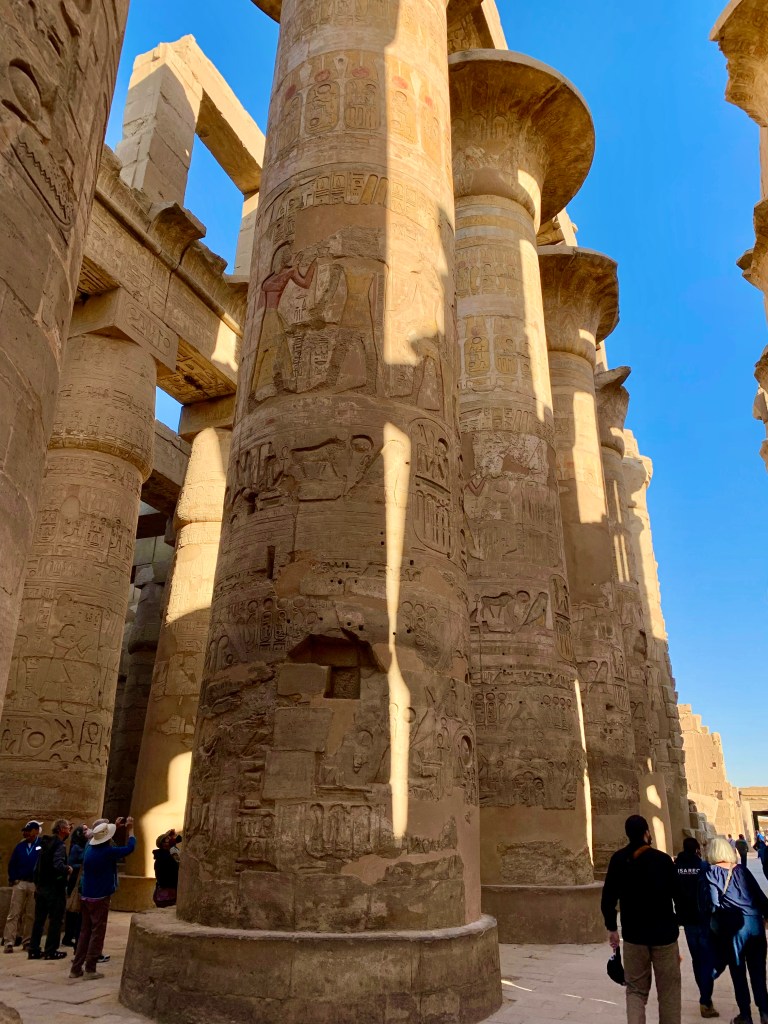
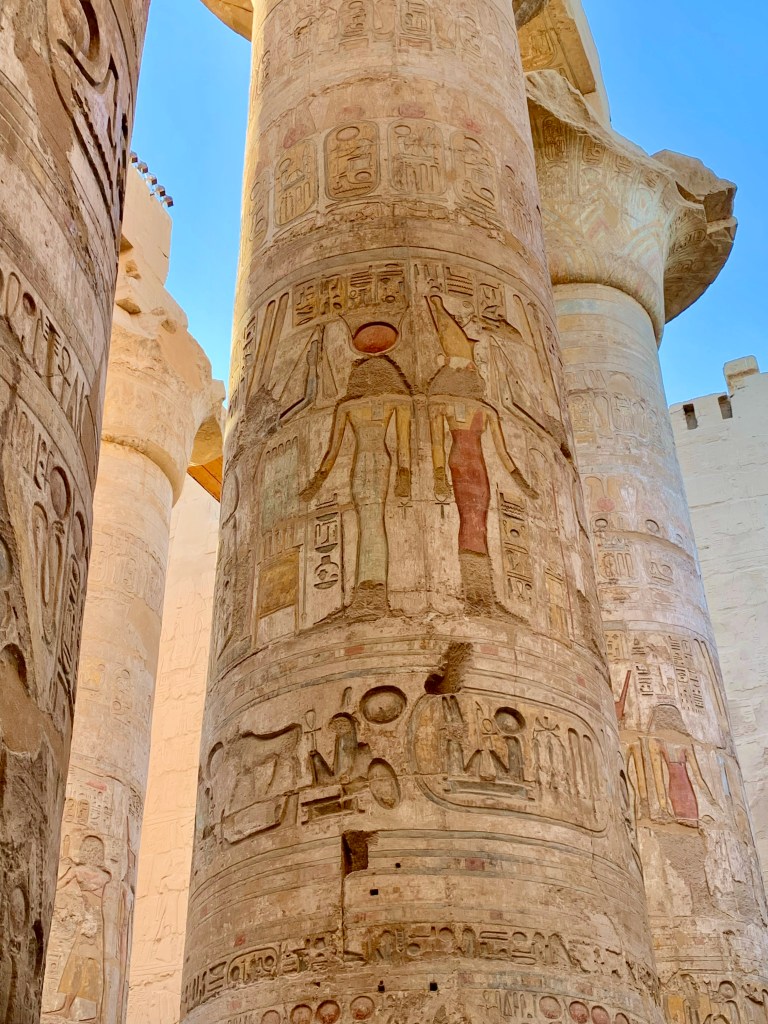
Karnak was built about 4,000 years ago. It was a large complex built for the priests and the King, no others were allowed entry. There was a man-made lake in the middle and outside the entrance was a large platform for commoners to gather during festivals. Different kings contributed so it grew over the years. The site was overwhelming, so much to see. The entrance was lined with ram-headed sphinxes. As we entered, the Great Hypostyle Hall was 54,000 square feet with 134 massive columns all beautifully painted. All but 12 columns are 10 meters (33 ft). high with the remaining ones being 21 meters high (69 ft.). The site is considered the largest religious building in the world.

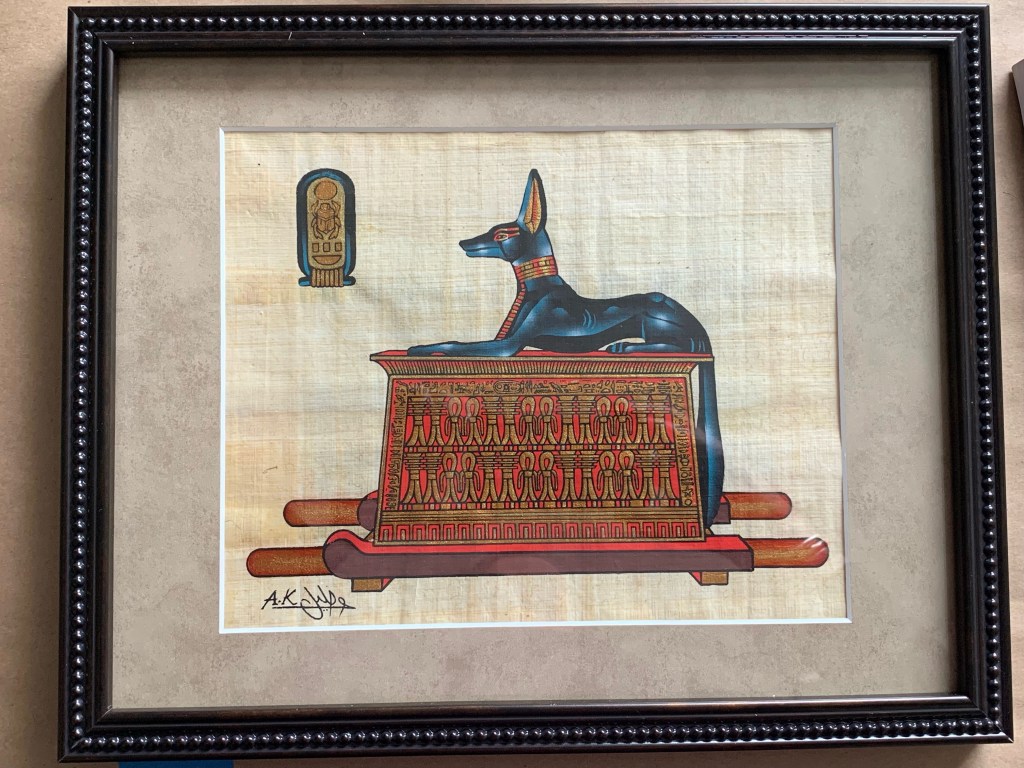
From there we headed into town and stopped at a place where they made papyrus paintings. We had a lesson on how papyrus was made and then were free to spend as much money as we wanted. The prices were reasonable so I bought one and framed it when I got home.

Anubis on papyrus

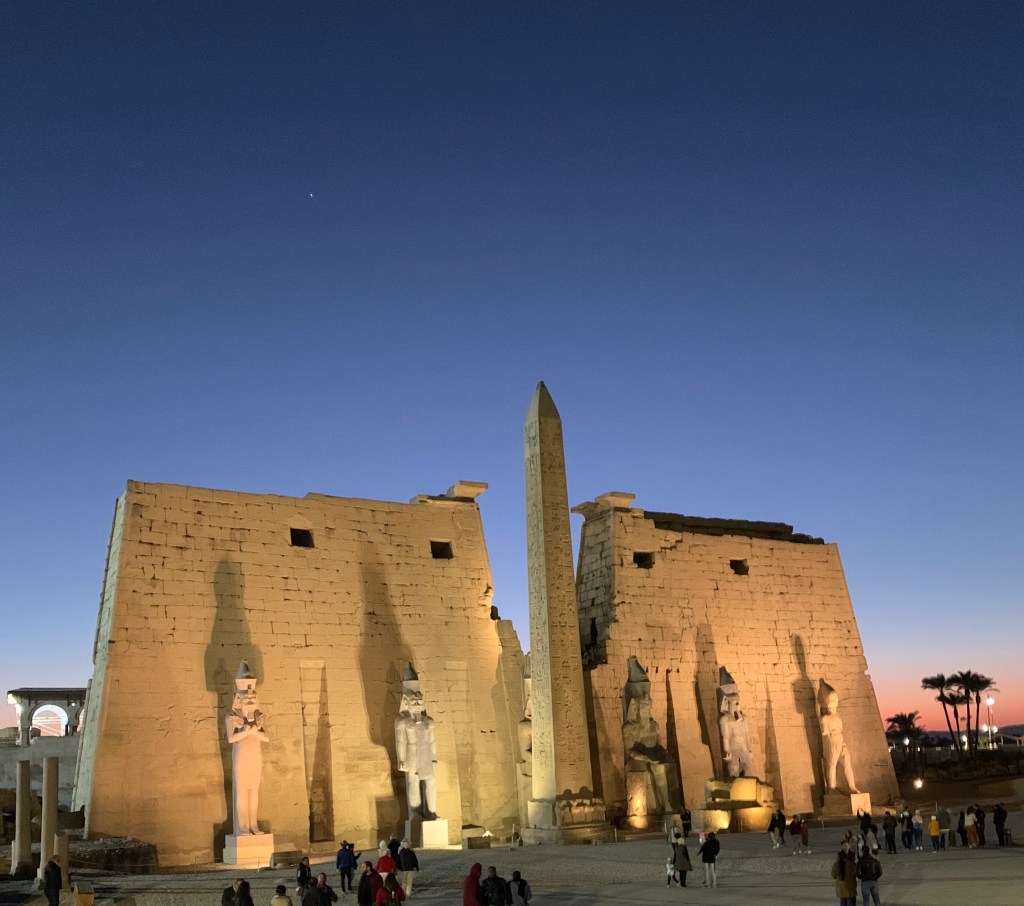
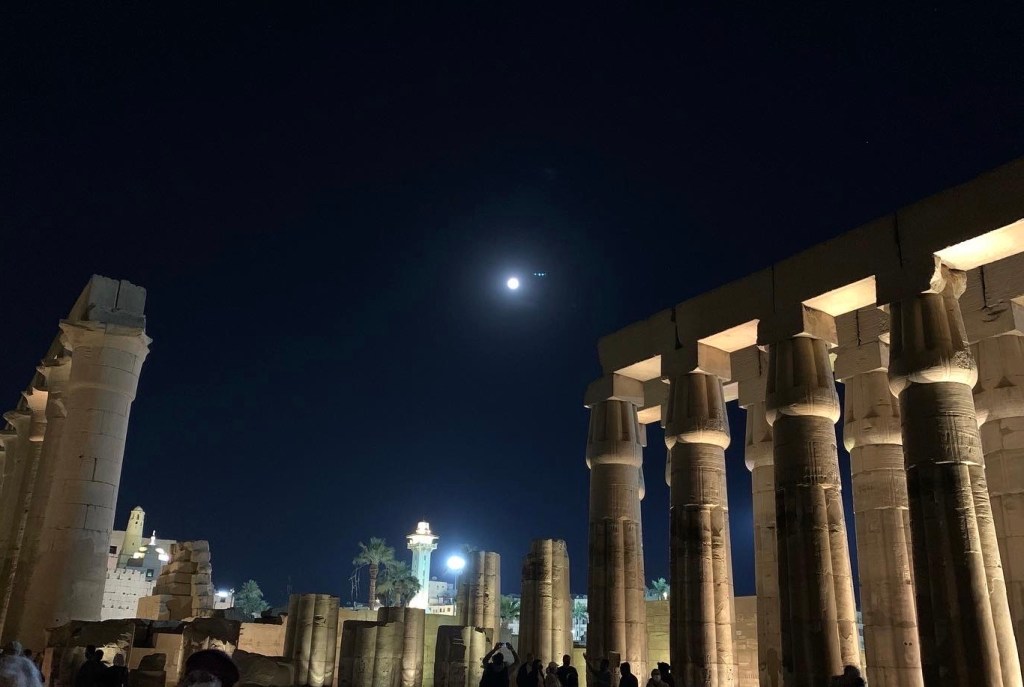
By this time it was getting dark, apparently the best time to see Luxor Temple. The temple was built about 1400 BC and was used mainly for coronations. In about 395 AD, the Romans occupied Egypt and converted the temple into a fortress and later put a Christian chapel inside. In 640 AD a mosque was added and is still used to this day.
There were originally two obelisks at its entrance. One is now at the Place de la Concorde in Paris. Our guide kept lamenting how many things had been stolen from Egypt. Recently excavated and open to the public, the Avenue of the Sphinxes ran from Luxor Temple to Karnak.

Next time: Valley of the Kings