
Composite wedjat-eye amulet
Polychrome glazed composition
Third intermediate period c. 1000-700 BC
Department of Ancient Egypt and Sudan
The British Museum

Visual Entertainment from Near and Far
Composite wedjat-eye amulet
Polychrome glazed composition
Third intermediate period c. 1000-700 BC
Department of Ancient Egypt and Sudan
The British Museum

Moving the Temple

Abu Simble, Egypt
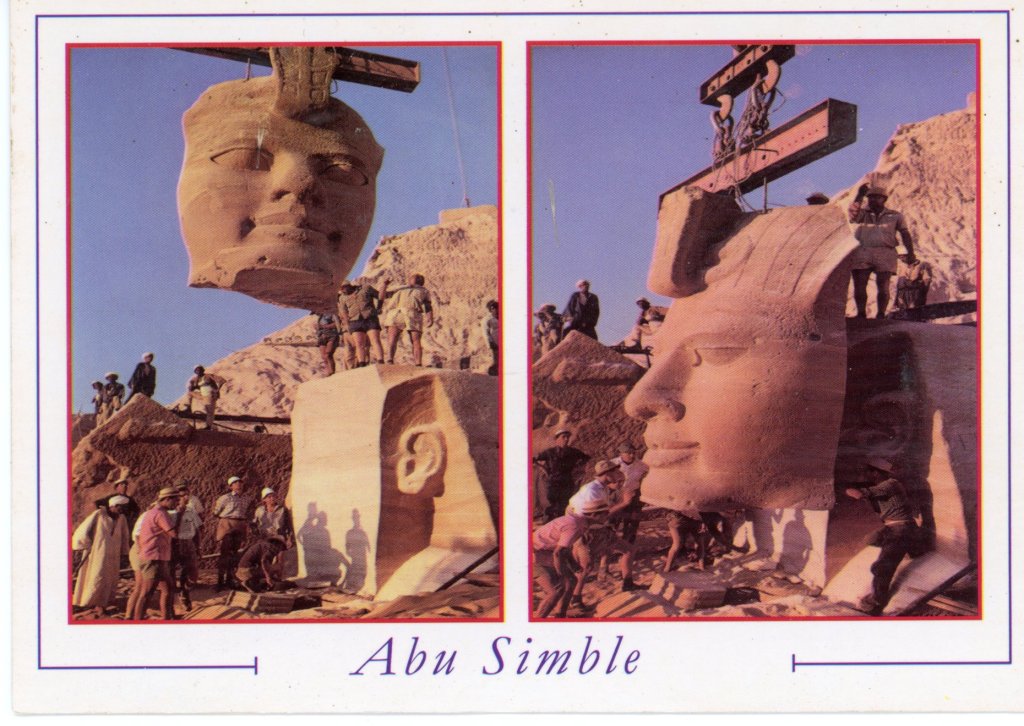
Abu Simble, Egypt. Moving the temple to higher ground.
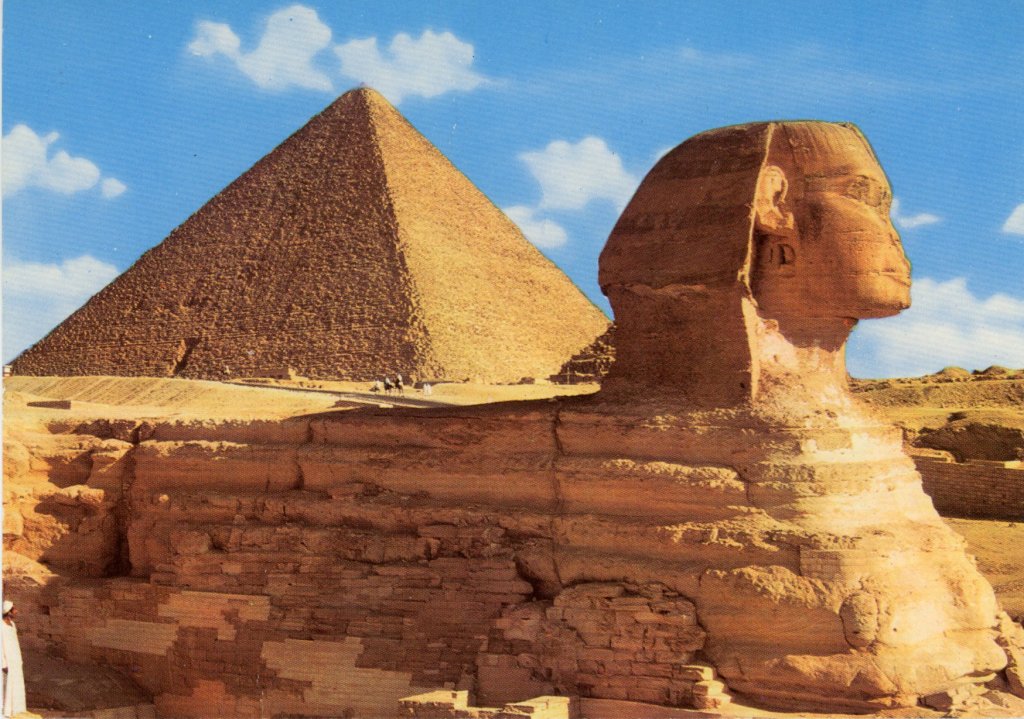
The Great Sphinx and Cheops Pyramid, Giza

Statues at Abu Simbel

January 1970
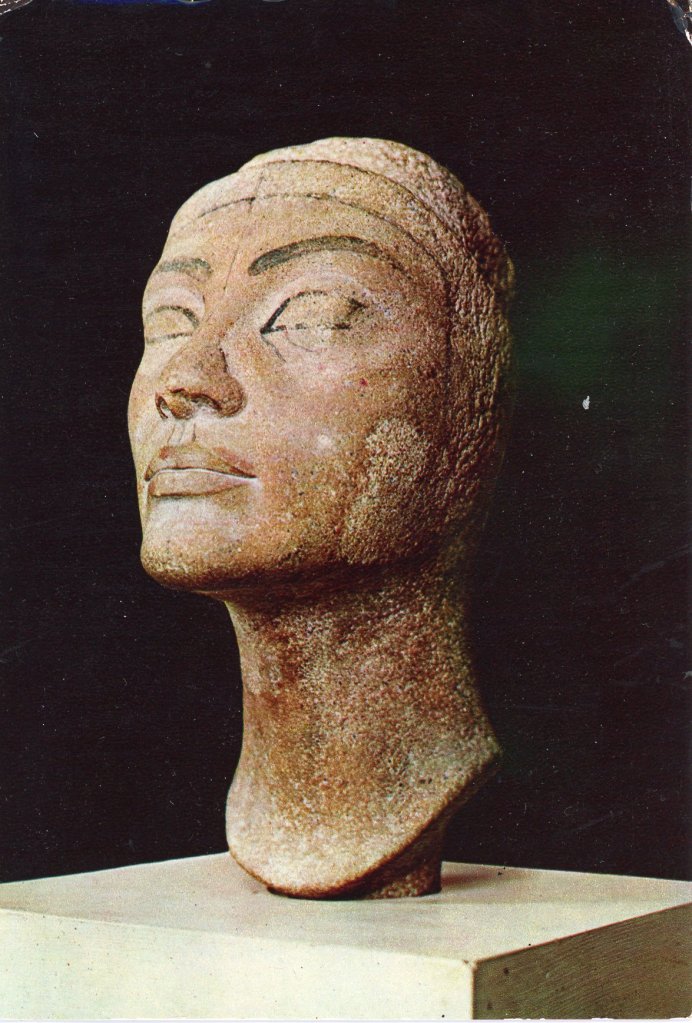
This is the real Nefertiti – and she is lovely. We saw so many ancient things today – things we had studied in your ancient history at Greengates. We are in a FF apt. right on the Nile. Your letter was here – thanks – and today we got a cable from Tim. Will go to Pyramids manana and to Karachi in aft.
Love, Mom
Cairo, Egyptian Museum. Unfinished quartzite head of Queen Nefertiti.
A little over a week ago I was in Cairo. Egypt. It seems like a lifetime ago. So far away. It was a fabulous trip. The weather was not hot but it was above zero every single day. A big improvement from where I am now.
This past week has not been the greatest. I spilled a full glass of water on my printer. My two year old oven range abruptly stopped working in the middle of cooking my dinner. And, I broke a water glass in the dishwasher. If this continues, I’m not sure this is going to be the best year, even after a trip to Egypt.
It makes me long for my next global adventure. Between Covid and the looming invasion of Ukrane, the world does not seem that inviting. However, always the optimist, I am starting to plan for Chile. I want to drive the Carretera Austral, the Southern Highway. I guess most people start at Puerto Montt and go south to O’Higgins. Apparently Bernardo O’Higgins is considered the liberator and father of Chile. Wonder where he came from…
Anyway, it is a beautiful area full of national parks, lakes, and mountains. Has anybody been? I would love to hear about it.
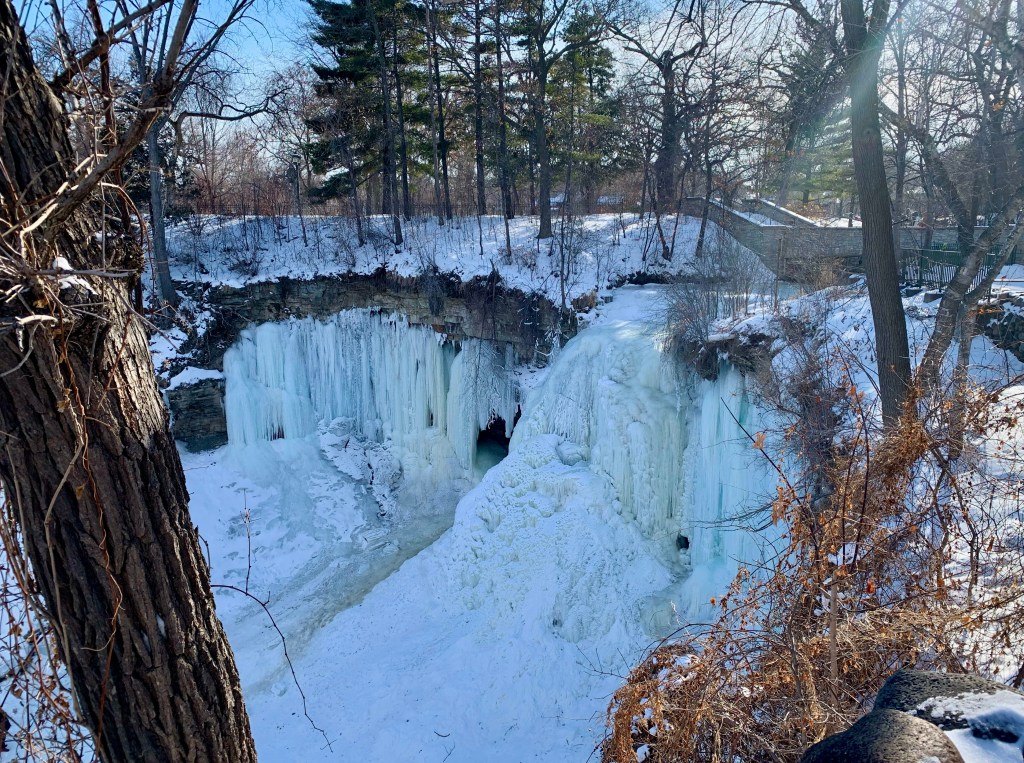
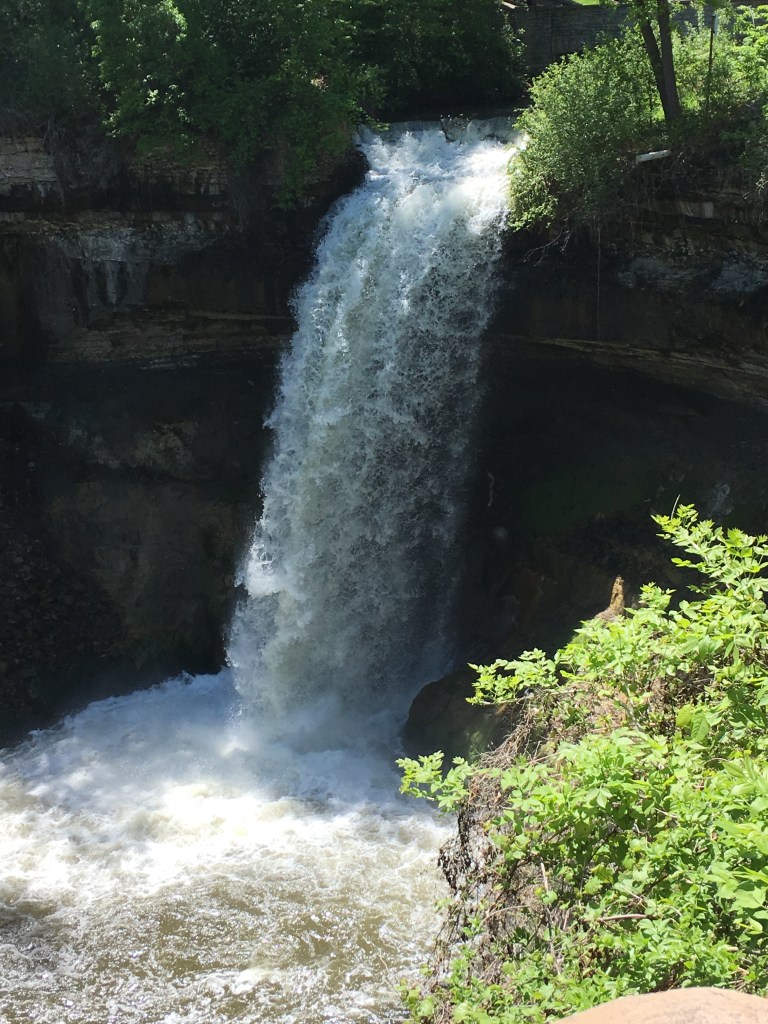
I will leave you with a photo of the above waterfall in its natural state.
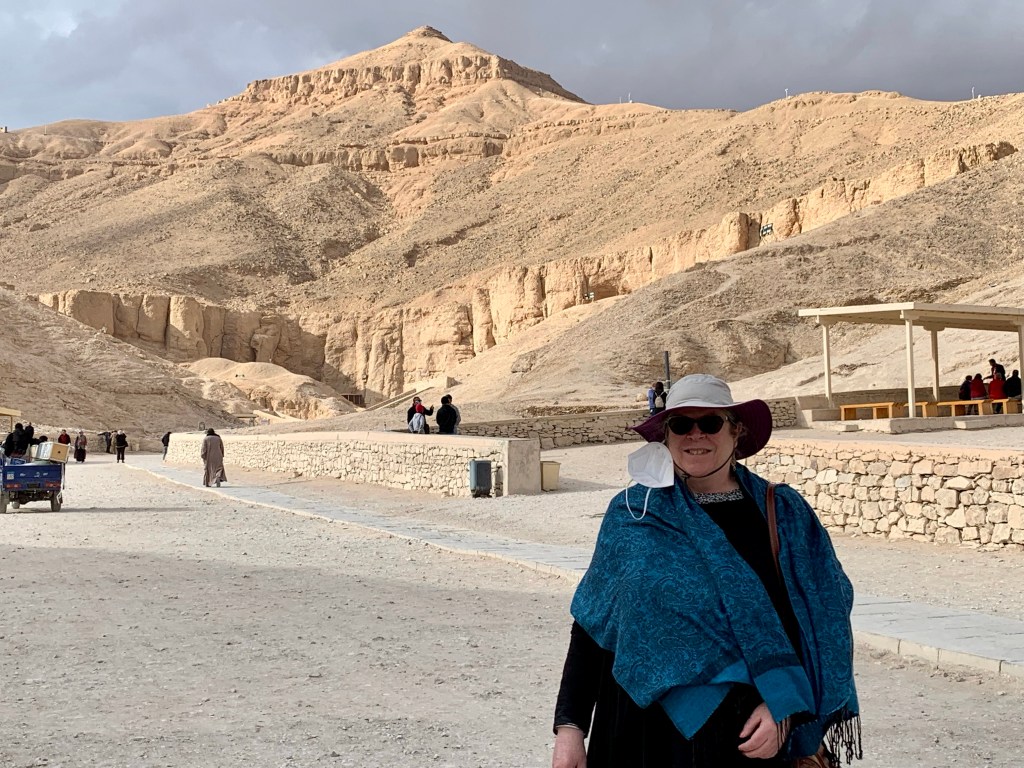
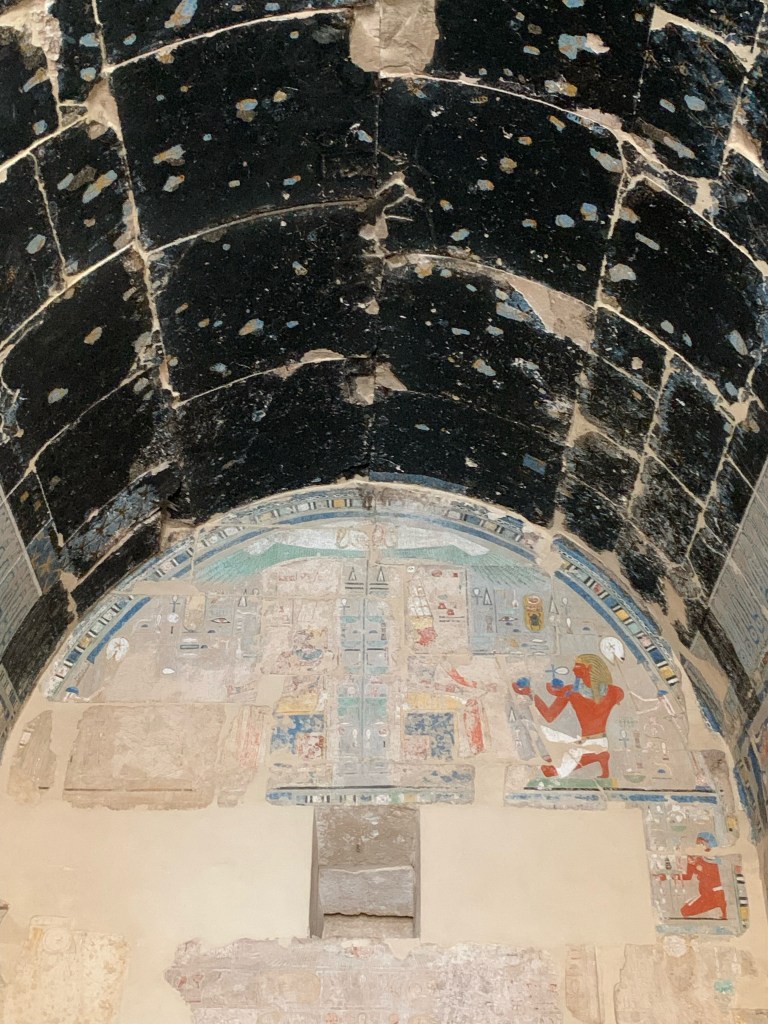
It was about a half hour drive from our ship to the Valley of the Kings. We saw agriculture and street scenes along the way.


Our first stop was a photo op at the statues of Amenhotep III and the Collossi of Memnon. These originally guarded the mortuary temple of Amenhotep III. They were damaged by earthquakes in 1200 BC and 27 BC.

We wound up the hill into the valley where the tombs were hidden. One reason they picked this area was the mountain was naturally shaped like a pyramid as you can see above. Only twelve of the 63 discovered tombs are open to the public at any given time and they alternate as they are worked on and restored. We saw four of them. The whole area was still being actively excavated. Some tombs were in better shape than others. King Tutankhamun’s tomb was the only one that still had a mummy in it and it will be moved soon. It is hard to describe the experience, it was beyond beautiful, so amazing to think how old they are.
I read all the Amelia Peabody books by Egyptologist Barbara Mertz aka Elizabeth Peters, that span the time from 1884-1923. She wrote 20 books based in Egypt mostly about archeologists digging around and solving mysteries. As I read them, I kept trying to imagine what the Valley of the Kings actually looked like back then, or even now. All I could imagine was a vast desert with nothing much else. Well, now I know. Take a look.

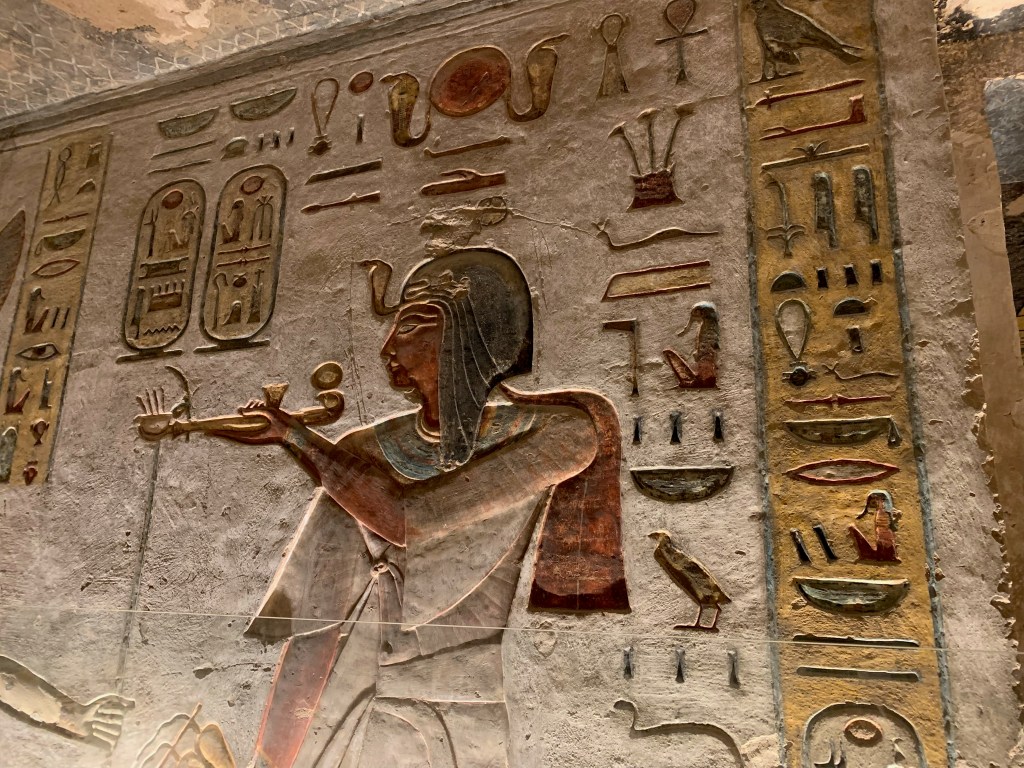


On the other side of the mountain, facing Karnak, was the Mortuary Temple of Pharoah Hatshepsut. Hatshepsut’s reign started roughly around 1500 BC and she was on the throne for 22 years. She ruled as a Pharaoh, presenting herself as male, wearing a false beard. She was an important figure. Her mortuary temple was where they prepared her body to be buried in the Valley of the Kings. It was an impressive structure built into the cliffs and directly opposite the Eighth Pylon, her addition to the Karnak site. It had three terraces with shrines to Hathor, Anubis, and Amun.

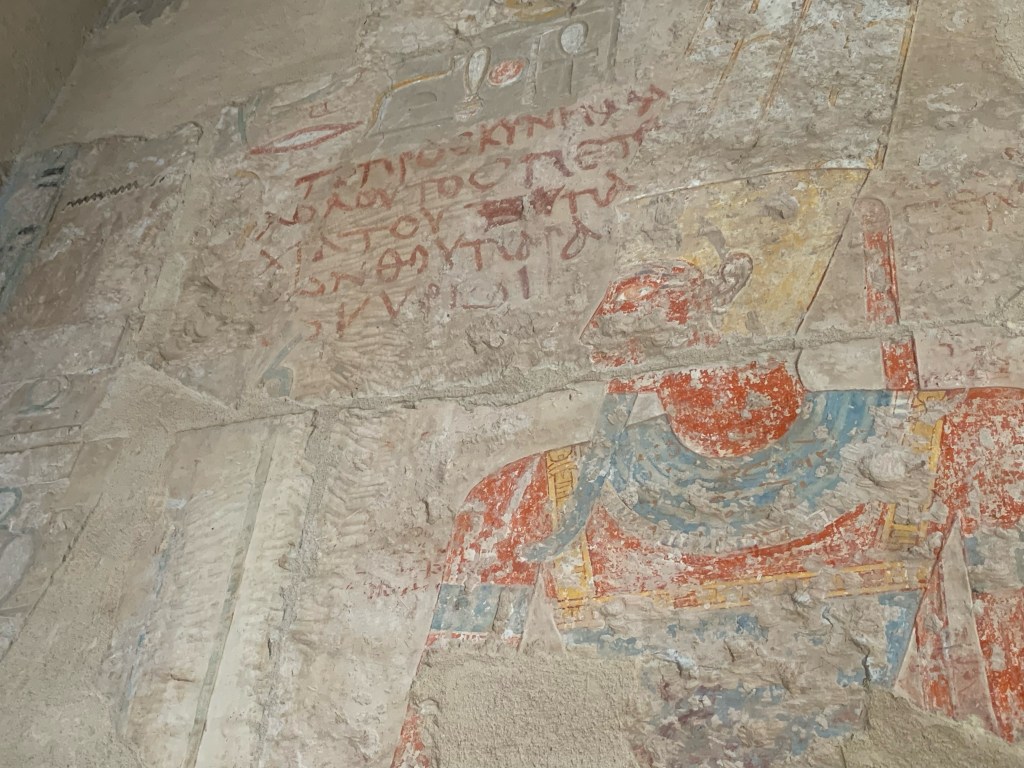



Then it was back to the ship for lunch and off to the airport. Return to Cairo.
Next: Giza and the Pyramids

First, a note on masks. Most people I came in contact with were wearing masks. At least indoors. I wore a mask all the time indoors unless I was eating. Outdoors I wore a mask if there were a lot of people around. Many people who were wearing masks, let them slip down below their nose. Does that qualify? Not sure that really does much. Whenever I got on a plane I double masked. I figured it was a small confined space so better safe than sorry.
There were only six people in our tour group which was fantastic. Our guide was a very nice man from Luxor who had a Masters degree in Egyptology. He was knowledgeable and happy to answer all our questions. Plus after doing this for twenty years he was still very enthusiastic about it all. It was interesting to wander around some of the more crowded areas and listen in to other guides. They all picked out different things to highlight and stories to tell.
Our cruise ship was called the MS Tulip. It had four floors and a top deck. The weather was in the 50’s and 60’s and very windy on board so not really pool weather but there was one. My fellow tourists took great advantage of the masseuse on board. There were only about 40-50 of us on board so we got a lot of attention from the staff with a couple of them hovering over us at all meals. One of them said “bon appetite” whenever he took a plate away. The food was abundant and for the most part pretty good. After reading Death on the Nile by Agatha Christie many years ago, I always wanted to float down the Nile. No murder this time…
As a young girl, I had a very colorful history teacher who brought it all to life. He told exciting detailed stories of Alexander the Great, Ramses II, Queen Hatshepsut, and many others. He told us about the great temple that Ramses II built into the mountain at the edge up the Nile River in 1200 BC. After learning about this magnificent temple, I read that the Aswan Dam was going to bury it in water and it upset me because I wanted to go see it. In 1968, an international team of engineers successfully moved the temple 65 meters up and 200 meters back in order to save it. I was still sad not to see the original but excited to go none the less.
On day four of my trip I boarded a flight in the early morning for Abu Simbel, 230 Km southwest of Aswan near the Sudanese border. It was a sunny day and the flight was spectacular. I never imagined the desert to have such interesting terrain. Big black rock dominated with specs of green along the river. As we descended we caught a glimpse of the temple from the air. It took our breath away. This was the highlight of my trip, my dream come true.

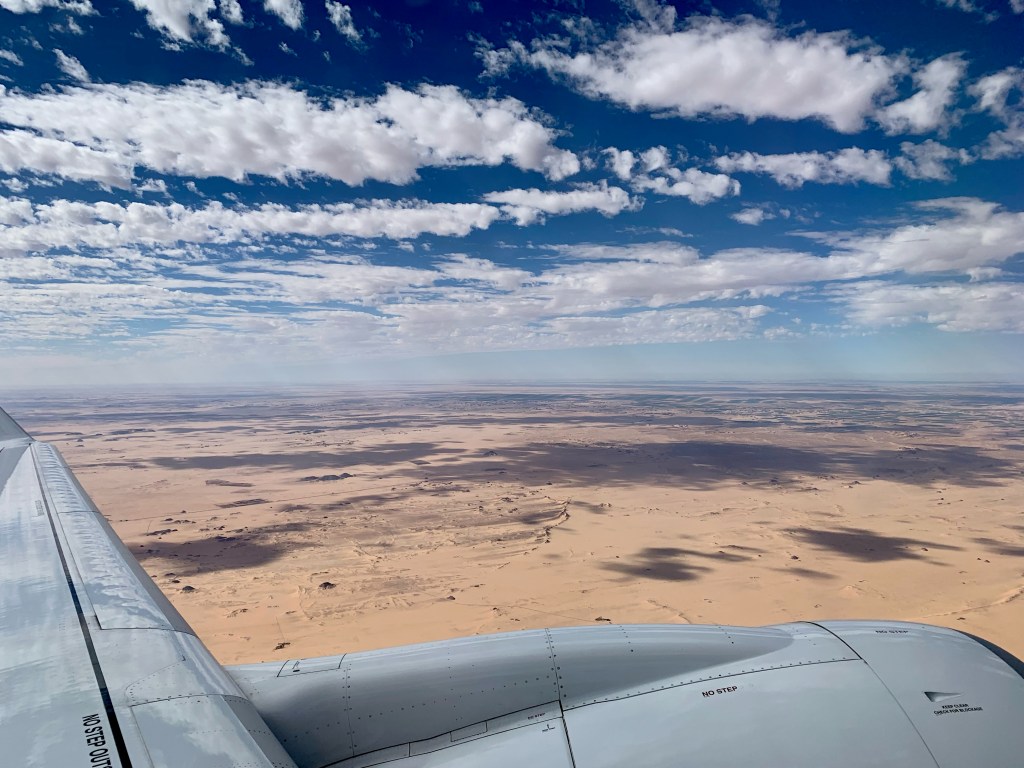
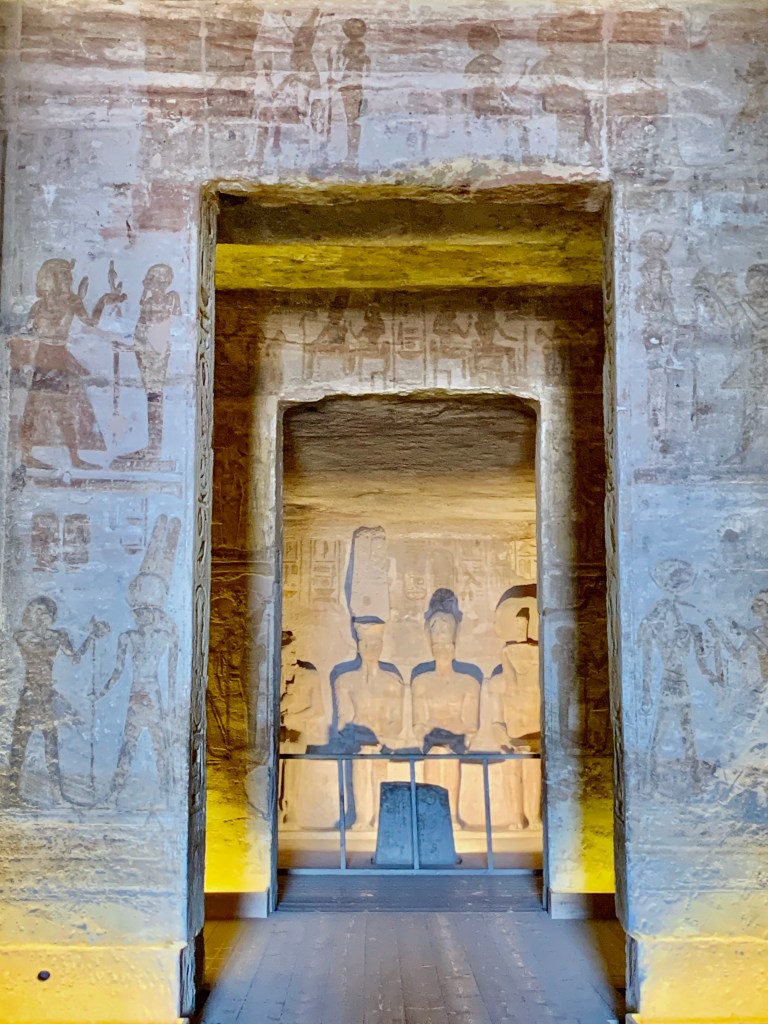
There were two temples at Abu Simbel. They sat next to each other against their artificial mountains. The Temple of King Ramses II was the larger one with statues measuring 20 meters high (66 ft.). Above the statues were twenty-two baboons worshiping the rising sun. Inside there was a main hall and chambers off to the side with a sanctuary at the back. In the sanctuary were four seated figures – Ra-Horakhty (the sun god), King Ramses, Amun Ra (the creator of all things) and Ptah (god of craftsmen and architects).
The temple was built so that on October 22 and February 22, the sun would enter the temple and light up the figures in the sanctuary with the exception of Ptah who was connected with death, the dark. These are said to be the dates of Ramses’ birth and coronation. There is no real evidence that this is true and the dates could have shifted over time but still, an amazing feat.




The second temple was built for King Ramses’ wife, Queen Nefertari. Her statues are half the size at 10 meters (33 ft.) high. It is rare in Egypt to see the Queen depicted as the same size as the King so it is clear she was important to him.

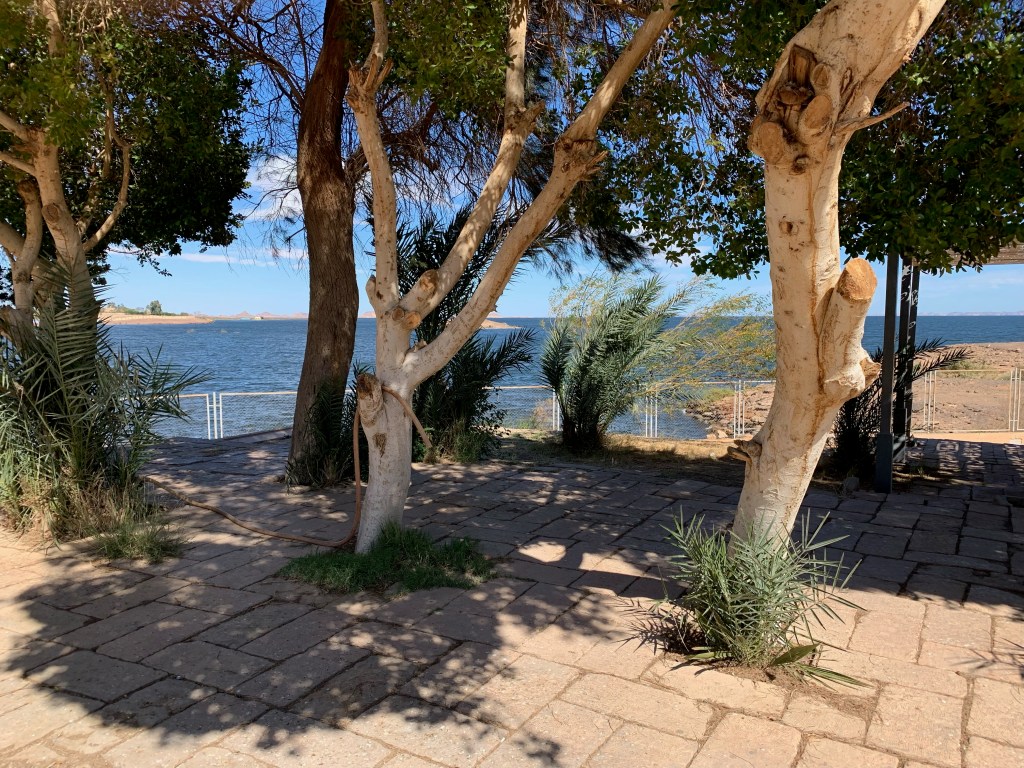


We returned to Aswan in the afternoon and as soon as we boarded our cruise ship, we set sail down river. In Egypt up is down as the river flows north to the Mediterranean. After dark, we stopped at Kom Umbo to visit the joint temple of Sobek (the Crocodile god) and Horus (the Falcon god), and the Crocodile Museum. The temple was built about 350 BC and has been damaged by earthquake, erosion and builders stealing rock to build other things. But on a clear night with a full moon, it was beautiful.


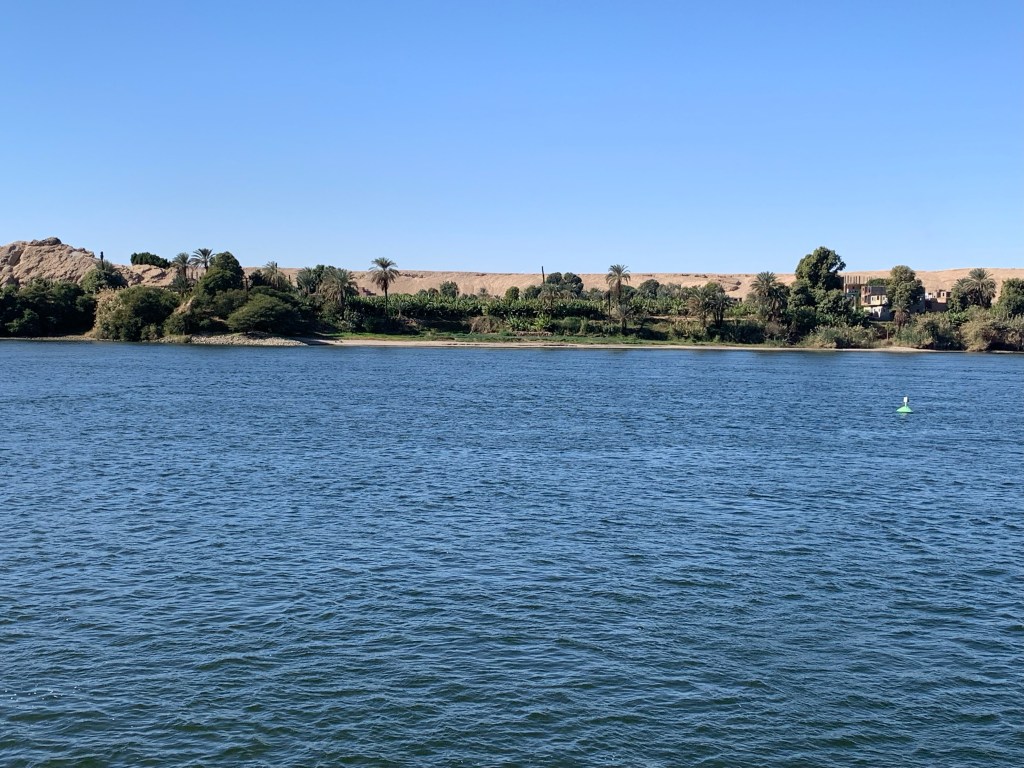
The next morning we had some time off so we just stayed in bed and watched the river bank as we sailed north to Luxor.

Our cabin staff were very creative and presented us with towel sculpture whenever we returned to our room.


Stay turned for Luxor….

Over a year ago we were well into the Covid pandemic. Things were starting to look up with the vaccine on the horizon. There was light at the end of the tunnel. I booked a trip to to Egypt for the following year and crossed my fingers. I was due to leave January 9, 2022.
In July, things started to open up and four friends of mine went to Egypt between then and September. Then Omicron hit. I weighed it all and decided to move forward. I would be ready to go but if it got canceled, I would be okay with that, too. I got my visa, my plane tickets, my vaccination docs. About two weeks before I was to go, I started hearing about all the flight cancellations. I was scared my flight would be cancelled or delayed and I would miss my connection in New York. So I decided to leave a day earlier and spend the night, just to be sure. My final itinerary arrived from the tour company. It looked like all systems were go.
The only Covid related requirement for entry was proof of full vaccination. I needed to set up the proof with a QR code on my phone. That was easily done. Getting back into the USA was a little more complicated. But more about that later.
I left my house on a Monday at 4 am to catch a 7 am flight. It was minus 4 degrees F, winter in Minnesota. My plane left on time. The following day I had to check out of my hotel and go to the airport very early. The flight was to leave at 6:30 pm and I was there about noon. There was no place to sit. I found a railing to lean against and finally checked in about 3 pm. I was on my way, double masked and excited.
We arrived in Cairo at about 11:00 am the next day but we didn’t arrive at our hotel until about 3 pm. There was so much red tape. We needed permission to leave the airport, we needed to have a tourist police body guard, etc etc. That evening, after a short bus tour of the city, we went to dinner at Feleyfel for mixed grill and hummus and baba ghanoush and other delights. It had been a long day. The food was good.
The sight seeing began early the next morning with a visit to the Egyptian Museum. It was crowded with Russians who had come over on a day tour from Hurghada on the Red Sea. They go to the seaside resorts to get away from winter cold and do day trips by bus to Cairo and Luxor. The Egyptians have built a new museum near the Pyramids and are in the process of transitioning items out of the Egyptian museum. It was still full of artifacts. They have so much stuff and are still discovering things all the time. The mummies had been moved to the Civilization Museum and so we only saw one or two. King Tut’s mask and other items were in a special room where you could not take photos. Our guide pointed out a few treasures and we wandered around for a while trying to take it all in.


That afternoon we wandered through the open market and then headed to the Citadel. Sultan Salah al-Din al-Ayyubi (Saladin) ordered the construction of a fortress on the Muzattam Hills overlooking Cairo in 1176 AD. It was completed by his successor Sultan Kamel ibn al-Adel in 1207 AD. Monuments were added to the area as well as a large Mosque which dominates the compound. The Mosque of Muhammad Ali Pasha. There are other smaller mosques and museums that can be visited. The day we were there, they were getting the mosque ready for a wedding.


Day three we had to get up at four in the morning to catch and early flight to Aswan. From the airport in Aswan, we boarded a bus and went directly to Aswan Dam and Lake Nasser, one of the largest man-made lakes in the world. Returning down river, we got onto a motorboat and crossed the river to Philae Island to tour the Temple of Isis. The temple was built during Egypt’s Greco-Roman period around 280 BC. It is hard to wrap your head around how old everything is. The obelisks from the front of the temple were taken by British Consul Henry Salt and are now in Dorset, England.


Our next stop was a quarry where an attempt to cut out a very large obelisk from the rock had failed since it had a large crack in it. They would dig out the rock around the shape they wanted to extract and use water to separate it. Yeah, I didn’t fully absorb the engineering angle but apparently it worked. Except for this time, anyway. From there we finally checked into our cruise ship and had some lunch. It was like 2 pm. And it wasn’t over yet.
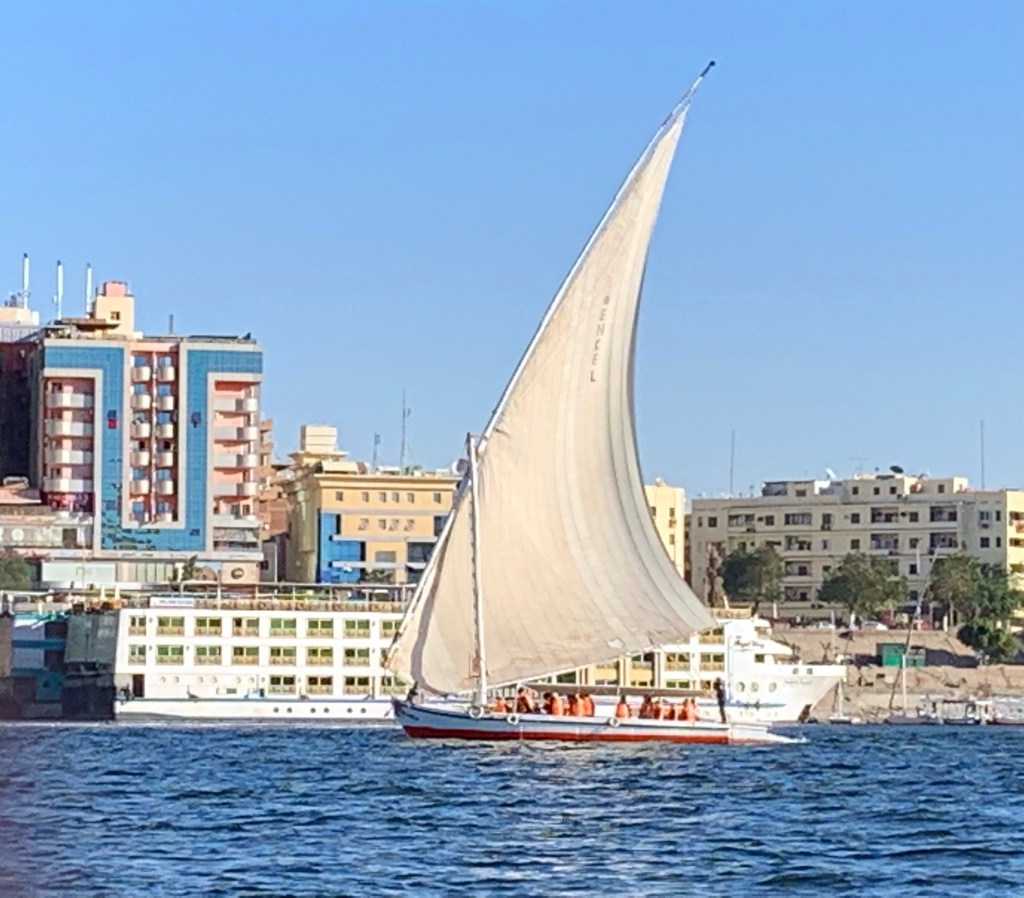
After lunch we all precariously made our way onto a felucca, a small sailboat. We sailed down river to a Nubian village where we were to take tea with some Nubian villagers. A dirt pathway surrounded by garbage took us up a hill where there was was a large pile of garbage, and on top of the pile were three goats and a cat munching away.
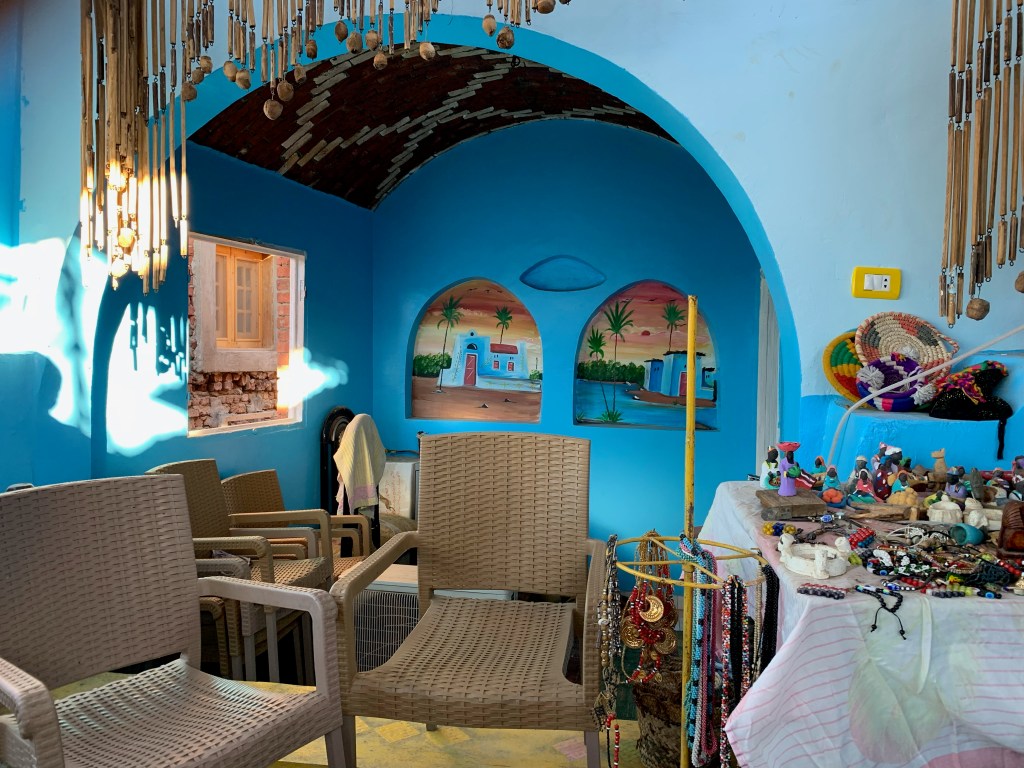
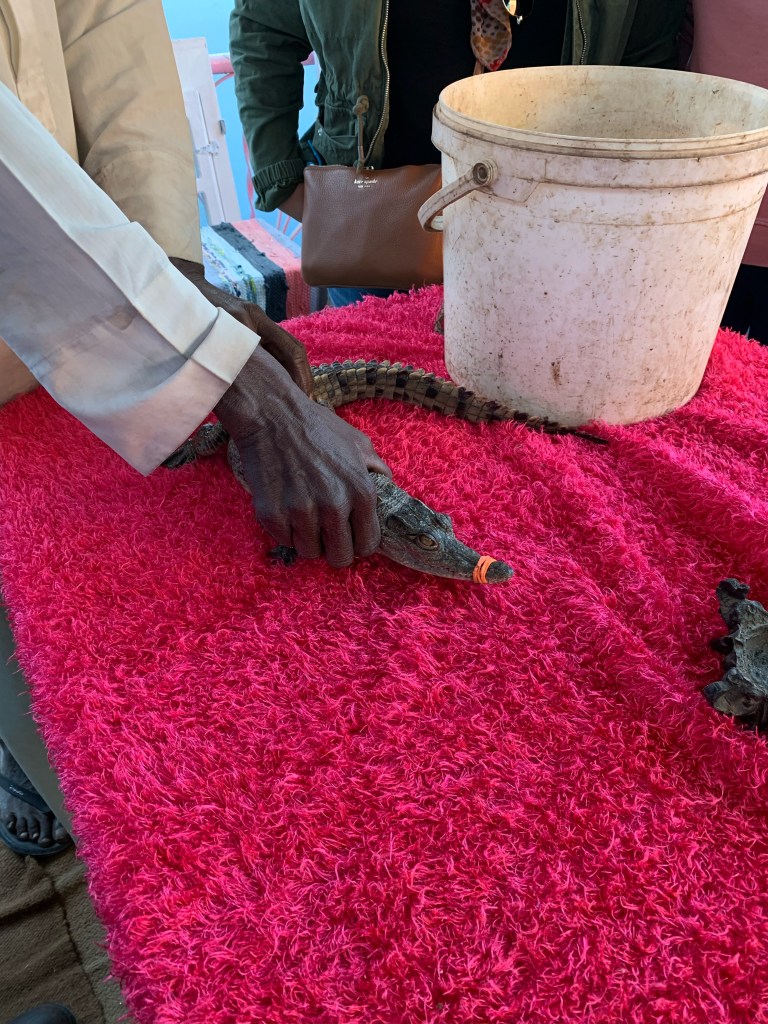
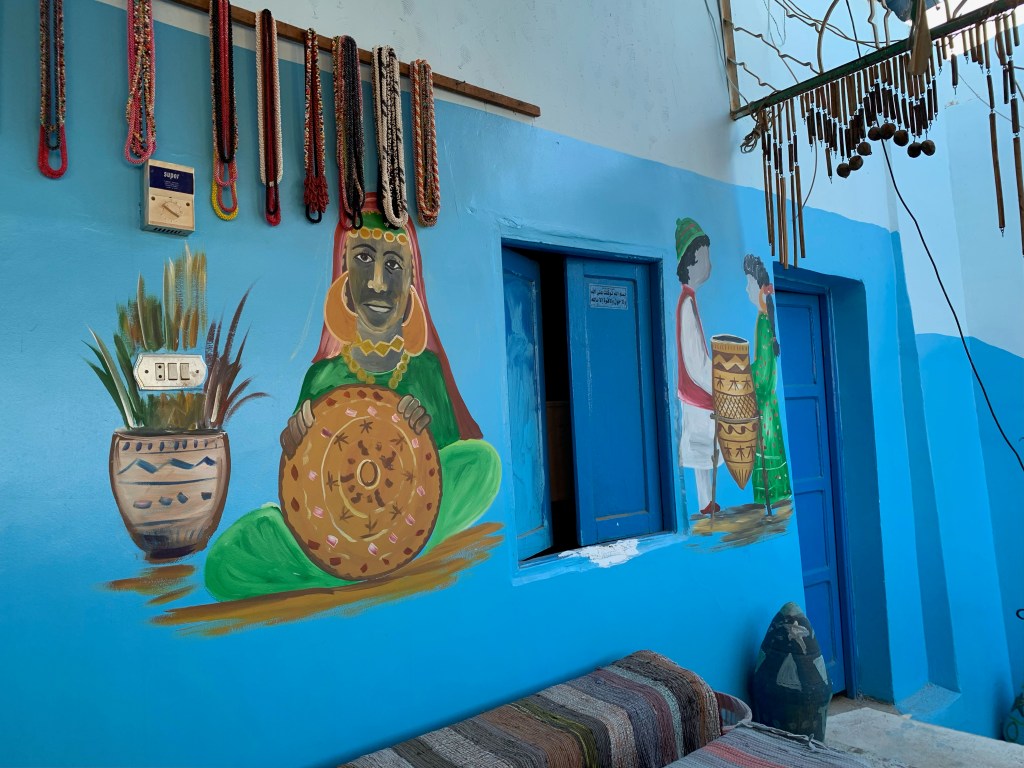
We turned the corner and were led by a man into a house. After climbing high steps we found ourselves in a very pleasant open air room with colorful paintings on the walls. The woman of the house was very welcoming and made tea for us. Our guide told us he had a surprise for us. The man we had seen earlier brought out a large white bucket. Inside the bucket was a baby crocodile. Lovely.

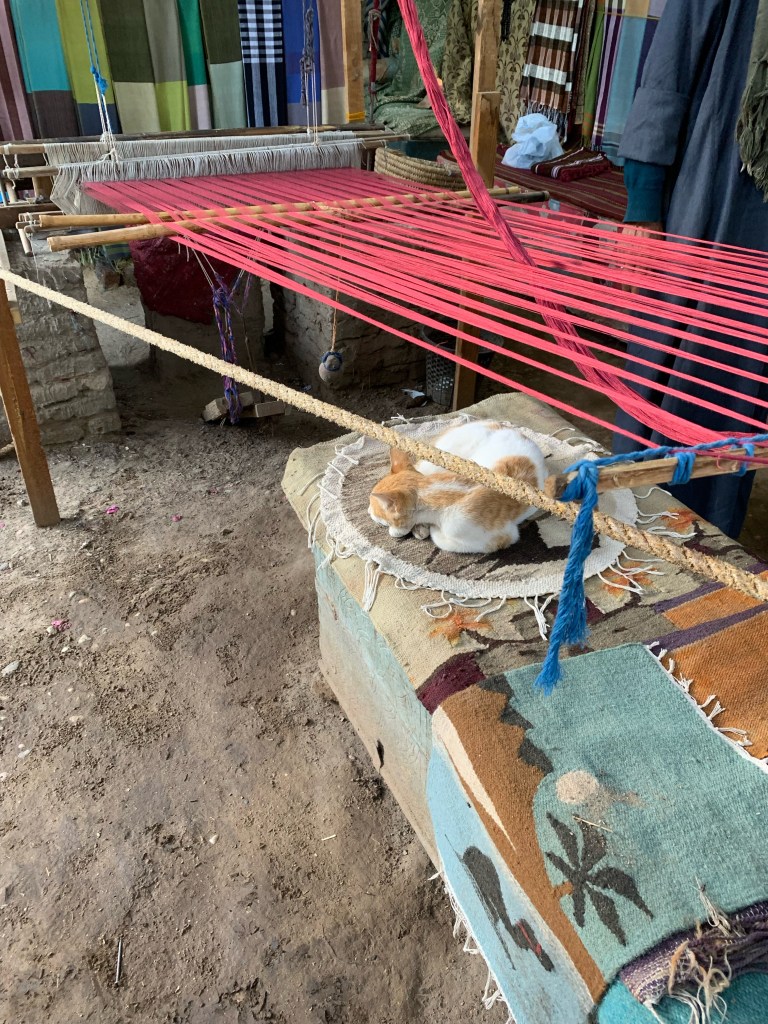
On our way out of the village we came across a man weaving. He was making beautiful scarves in a room with a loom and shelves of his finished products. He made several sales that day. Interestingly enough we saw a poster of the very weaver at the airport. Apparently he had been recognized for something or other. By the way, there are lots of stray dogs and cats in Egypt. One of my tour companions kept wanting to feed them.

Back on the felucca, we made our way zig zagging back to our cruise ship.

Day four was another early day, we had to catch a flight to Abu Simbel.
to be continued….
 Postcard Buzz