Egypt Part Four: Valley of the Kings

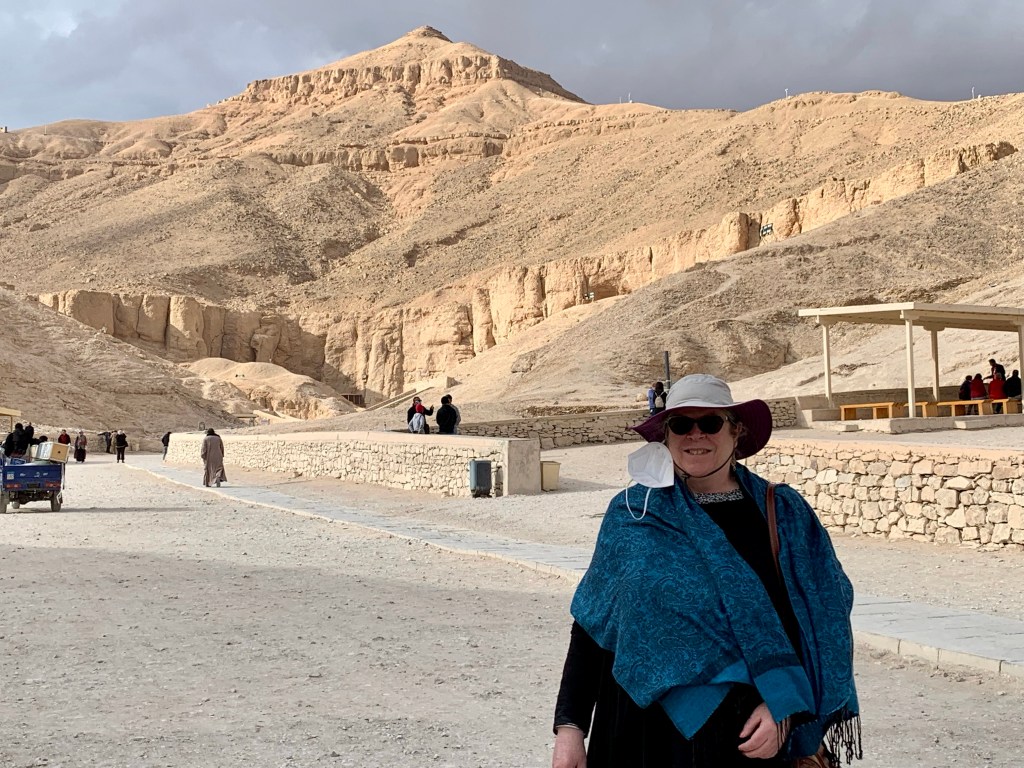
Indiana Jones in the Valley of the Kings, pyramid shaped mountain in background

It was about a half hour drive from our ship to the Valley of the Kings. We saw agriculture and street scenes along the way.

Our first stop was a photo op at the statues of Amenhotep III and the Collossi of Memnon. These originally guarded the mortuary temple of Amenhotep III. They were damaged by earthquakes in 1200 BC and 27 BC.

Amenhotep III and the Collossi of Memnon

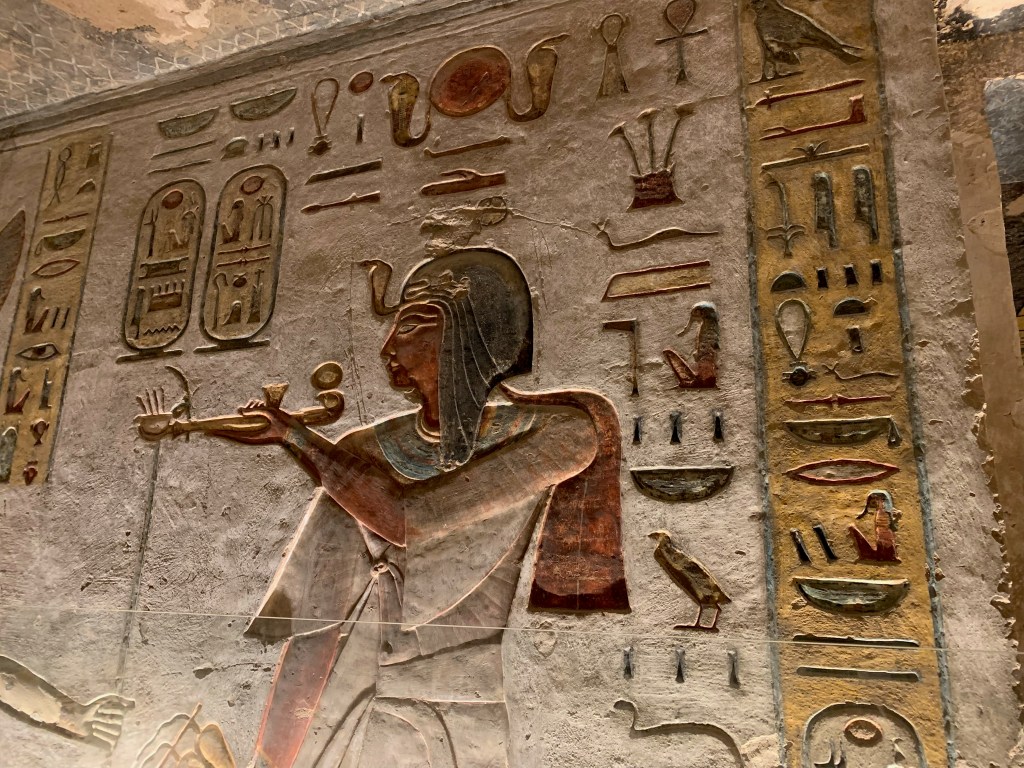
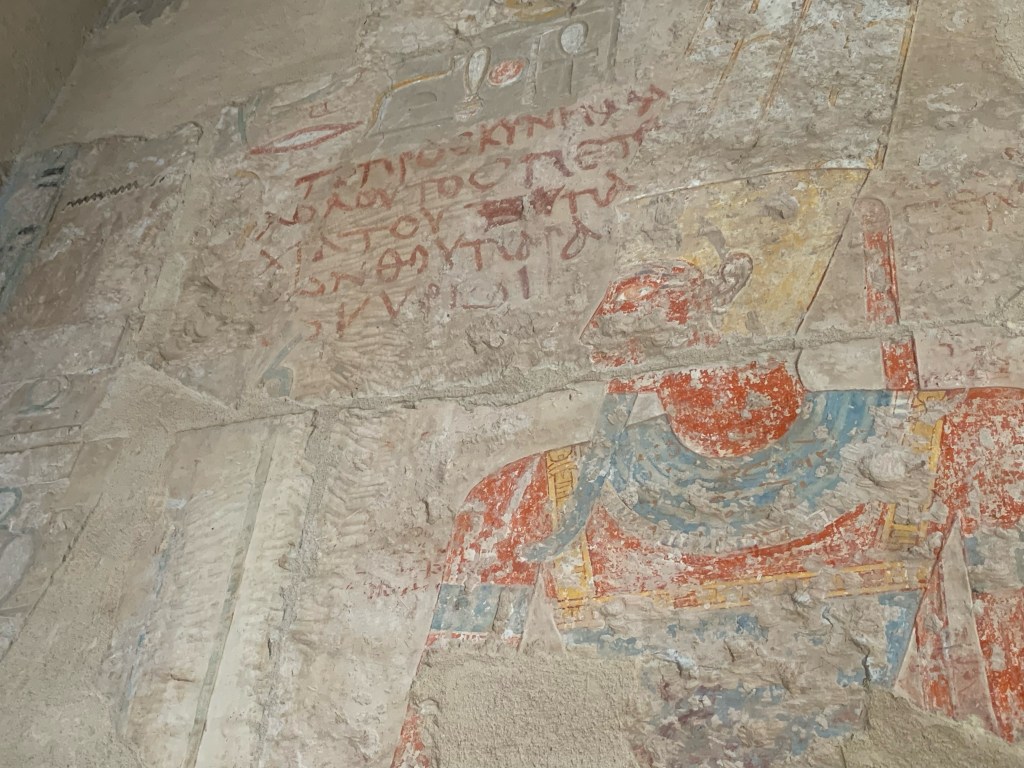
We wound up the hill into the valley where the tombs were hidden. One reason they picked this area was the mountain was naturally shaped like a pyramid as you can see above. Only twelve of the 63 discovered tombs are open to the public at any given time and they alternate as they are worked on and restored. We saw four of them. The whole area was still being actively excavated. Some tombs were in better shape than others. King Tutankhamun’s tomb was the only one that still had a mummy in it and it will be moved soon. It is hard to describe the experience, it was beyond beautiful, so amazing to think how old they are.

I read all the Amelia Peabody books by Egyptologist Barbara Mertz aka Elizabeth Peters, that span the time from 1884-1923. She wrote 20 books based in Egypt mostly about archeologists digging around and solving mysteries. As I read them, I kept trying to imagine what the Valley of the Kings actually looked like back then, or even now. All I could imagine was a vast desert with nothing much else. Well, now I know. Take a look.

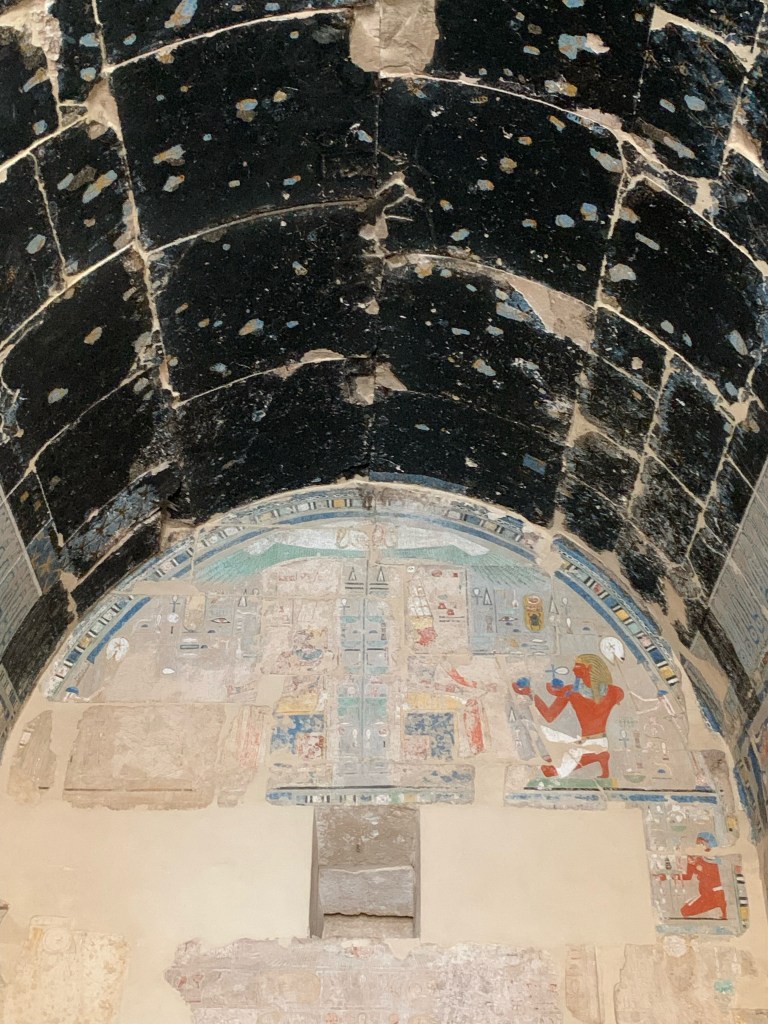
On the other side of the mountain, facing Karnak, was the Mortuary Temple of Pharoah Hatshepsut. Hatshepsut’s reign started roughly around 1500 BC and she was on the throne for 22 years. She ruled as a Pharaoh, presenting herself as male, wearing a false beard. She was an important figure. Her mortuary temple was where they prepared her body to be buried in the Valley of the Kings. It was an impressive structure built into the cliffs and directly opposite the Eighth Pylon, her addition to the Karnak site. It had three terraces with shrines to Hathor, Anubis, and Amun.

Then it was back to the ship for lunch and off to the airport. Return to Cairo.

Next: Giza and the Pyramids

Egypt Part Three: Karnak and Luxor

We docked in Luxor about lunchtime. We were tied to another ship so we had to walk through that one in order to get onto land. We could see in some places the ships were four or five deep. In the afternoon we set out for Karnak on the east bank of the river. In old Egypt, the east side of the river was associated with life as the sun rises in the east. The west side of the river was associated with death as the sun sets in the west. Therefore, generally, temples were built on the east side and tombs were on the west side. In Luxor, the Temples of Karnak and Luxor are on the east side and the Valley of the Kings is on the west side.

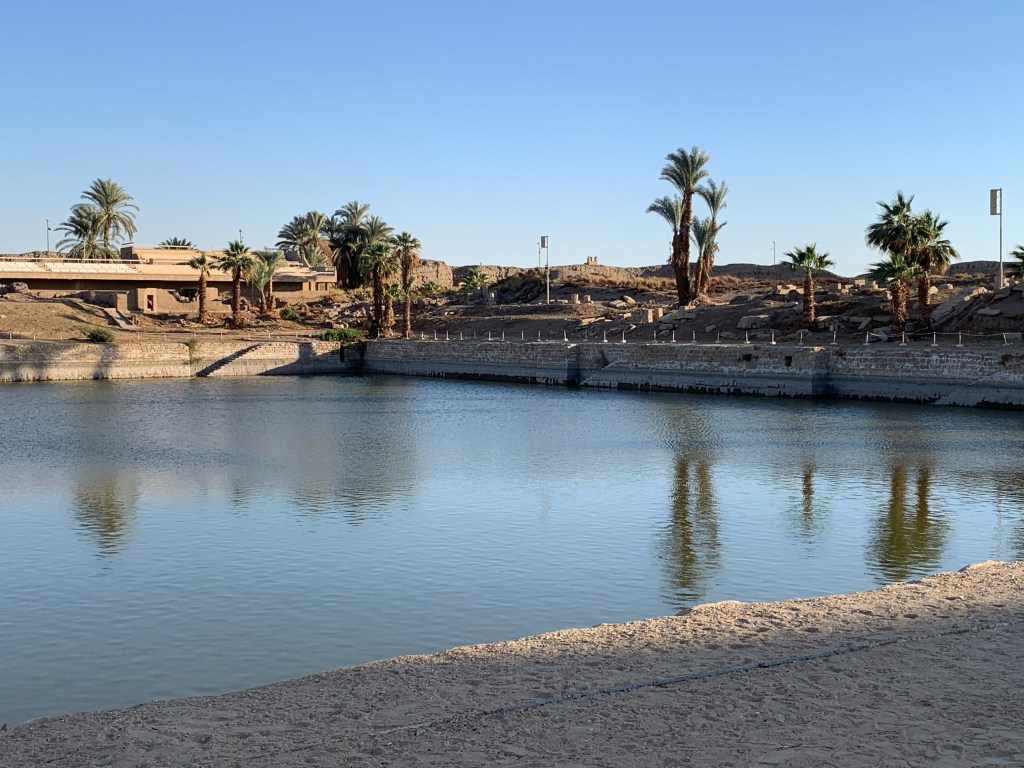
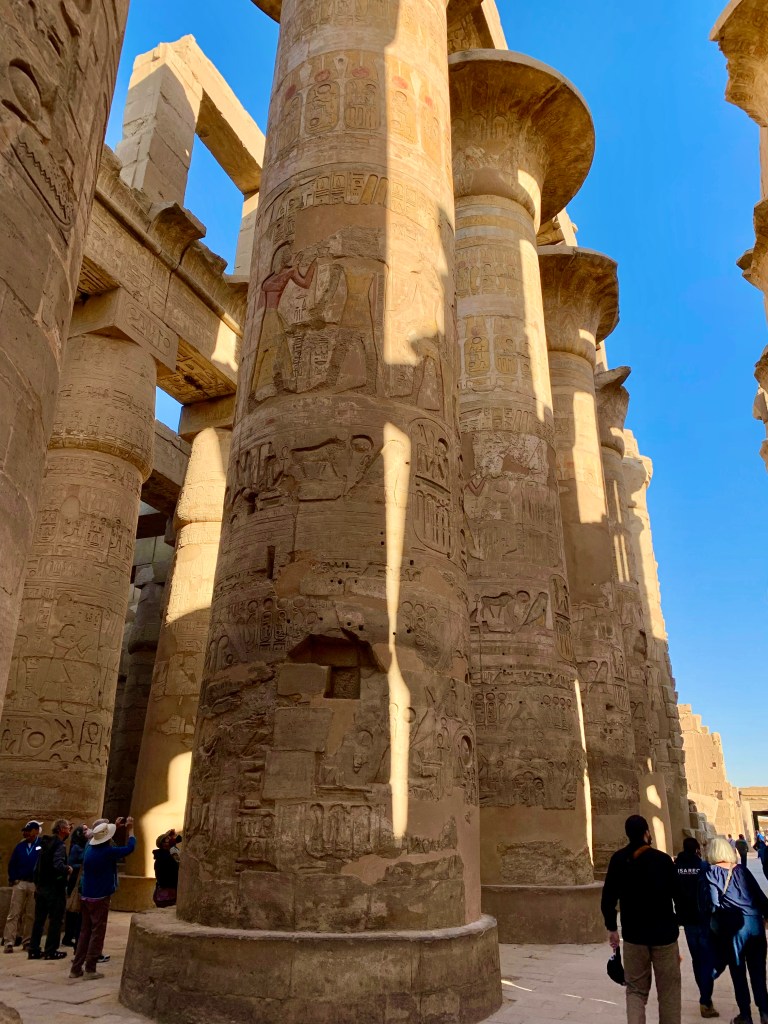
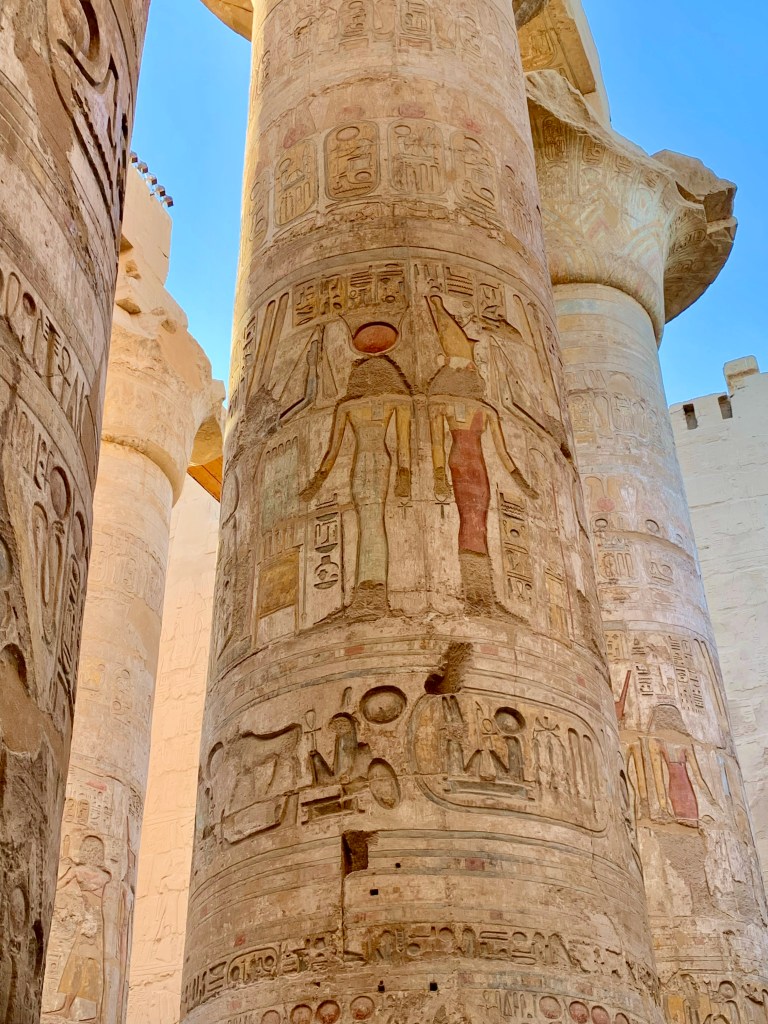
Karnak was built about 4,000 years ago. It was a large complex built for the priests and the King, no others were allowed entry. There was a man-made lake in the middle and outside the entrance was a large platform for commoners to gather during festivals. Different kings contributed so it grew over the years. The site was overwhelming, so much to see. The entrance was lined with ram-headed sphinxes. As we entered, the Great Hypostyle Hall was 54,000 square feet with 134 massive columns all beautifully painted. All but 12 columns are 10 meters (33 ft). high with the remaining ones being 21 meters high (69 ft.). The site is considered the largest religious building in the world.

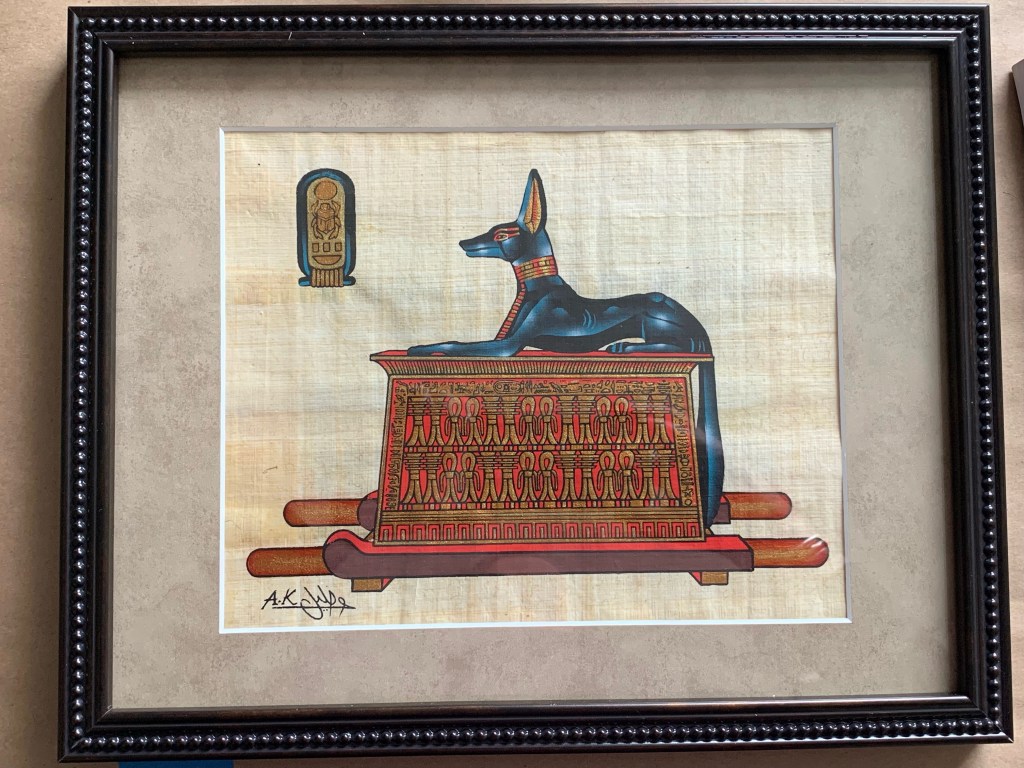
From there we headed into town and stopped at a place where they made papyrus paintings. We had a lesson on how papyrus was made and then were free to spend as much money as we wanted. The prices were reasonable so I bought one and framed it when I got home.

Anubis on papyrus

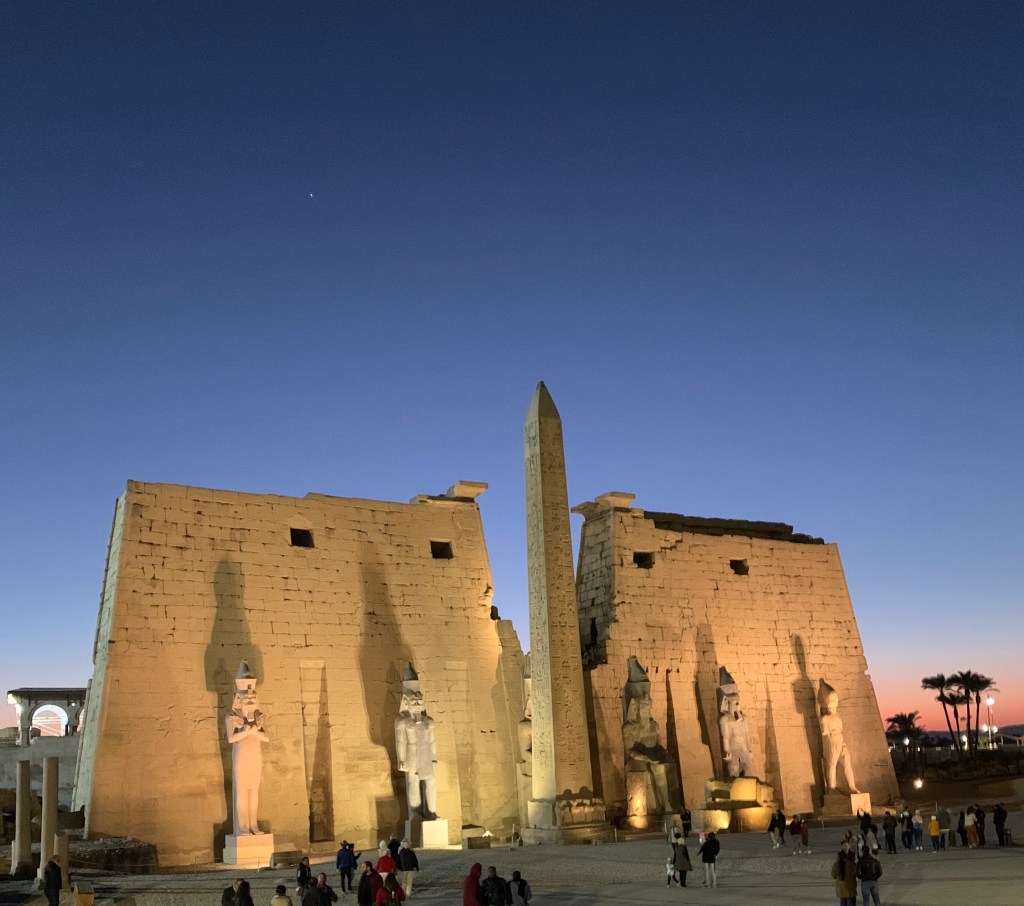
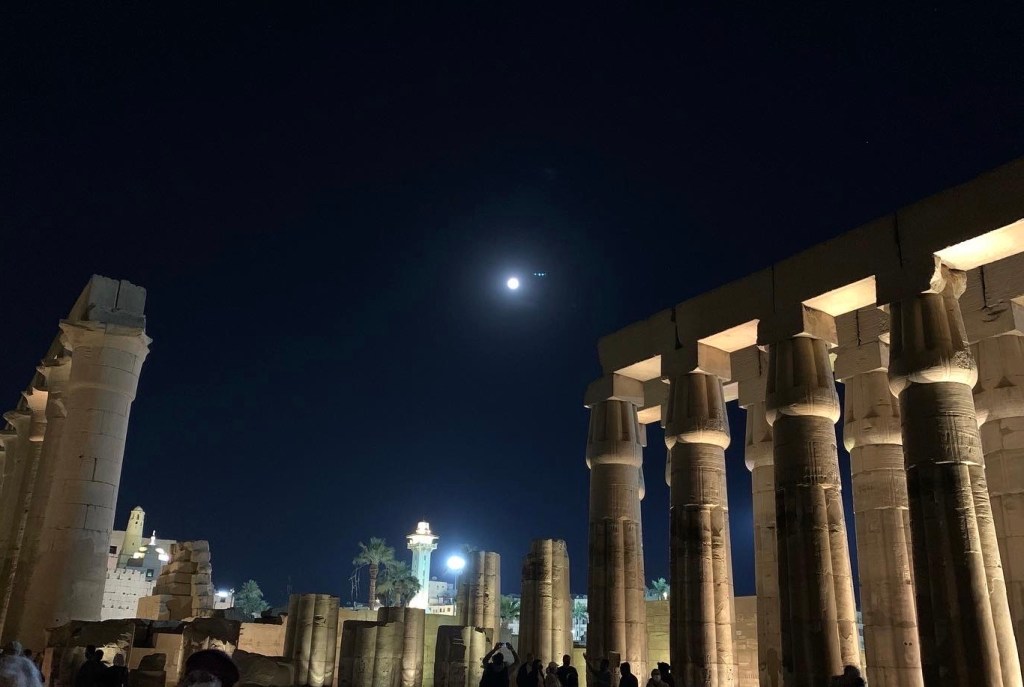
By this time it was getting dark, apparently the best time to see Luxor Temple. The temple was built about 1400 BC and was used mainly for coronations. In about 395 AD, the Romans occupied Egypt and converted the temple into a fortress and later put a Christian chapel inside. In 640 AD a mosque was added and is still used to this day.
There were originally two obelisks at its entrance. One is now at the Place de la Concorde in Paris. Our guide kept lamenting how many things had been stolen from Egypt. Recently excavated and open to the public, the Avenue of the Sphinxes ran from Luxor Temple to Karnak.

Next time: Valley of the Kings