
August 1968
Hi
After presenting my paper at noon I ate a quick lunch and headed for the beach. It was a beautiful day and I didn’t get too burned.
Love

Visual Entertainment from Near and Far
August 1968
Hi
After presenting my paper at noon I ate a quick lunch and headed for the beach. It was a beautiful day and I didn’t get too burned.
Love


February, 1966
We did leave Mexico finally at 9:10 am by American and had a wonderful flight much better than Braniff. E. met us at customs and took us home for lunch and left there about 1:30. They had three inches of snow in San Antonio, first in 40 years. We arrived here at 5:15 and went to the Rodeo at the Astrodome last night. Doc and Festus were guest stars, Jimmy Dean is to be here the 28th – would have preferred him! Enjoying every minute still.
Love
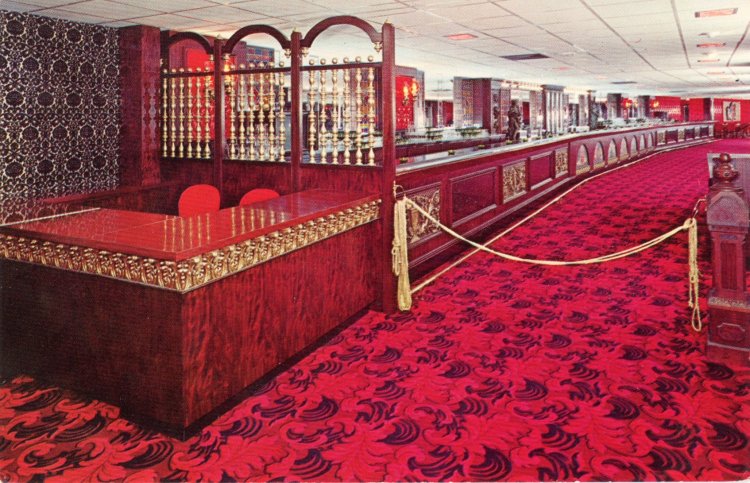
Inside the Astrodome – this is the first thing you see when you enter the Astrodome Club. It is a bar 10 feet long, the longest in Texas. You can get yourself a drink, turn around and walk six steps, and enjoy what’s taking place down on the field.
The Astrodome opened in 1965 and was still in use for various things until the early 2000’s. It was the world’s first multi-purpose domed stadium.

1990
Hi
We’re having fun seeing old friends and the sights. We went out to Alcatraz on Sunday and N started his seminar Monday. He seems to like it. I have been walking all over town and pretty much have the buses down. It’s good to be in California. It’s cool!
Love
(I think I was referring to the weather since I was living in Florida at the time…)

The entrance to the railroad exhibit at the New York World’s Fair 1939 appears very much like a glorified and modernistic roundhouse for locomotives.The Rotunda above contains 25,000 square feet of floor space leading to a circular theme hall 180 feet in diameter surmounted by a dome approximately eight stories in height. Sponsored by the Eastern Presidents Conference of the railroads, the exhibit includes a building nearly a quarter of a mile long, an outdoor exposition including nearly a mile of track, a colorful pageant telling the history of American railroads and the largest working miniature railroad ever constructed. The building contains 110,000 square feet of floor space and is the largest at the Fair.
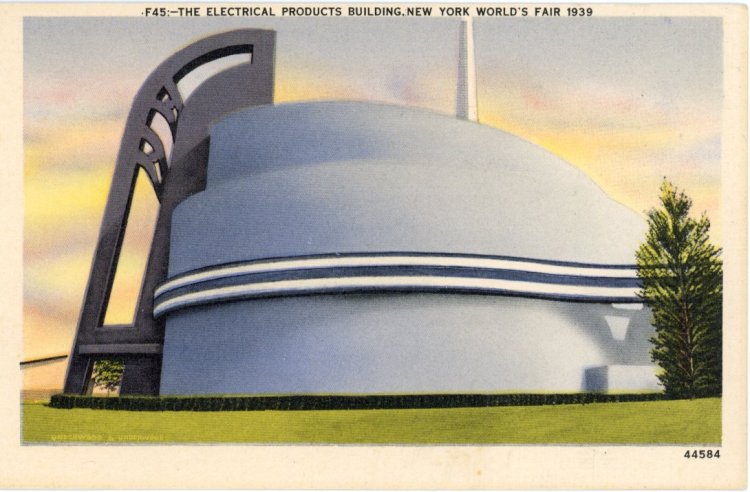
The Electrical Products Building, New York World’s Fair is a rainbow of colors glowing across the World of Tomorrow. The Electrical Building is in the “Blue Sector” with a mural hint of ‘Wonders’ displayed behind its portals. The oddly shaped pylon at the left is an outstanding feature of the building. Architects: Walker and Gillette.

The Hall of Pharmacy at the New York World’s Fair 1939 shown in the center of this photograph, which has been taken over by contract by The Show Globe, Inc., presents the entire story of research, development, manufacture and distribution of drugs and pharmaceutical products. The building, built by the Fair Corporation, occupies one of the most prominent sites in the Exposition grounds, being close to the Theme Center, the 200 foot Perisphere and 700 foot Trylon, partly shown at the extreme left of the photograph. Architects: Pleasants Pennington, G. Lyman Paine, Jr. and I. Woodner-Silverman.
The 1939 New York World’s Fair took place in Flushing Meadows-Corona Park, Queens, New York. Many countries participated and over 44 million people attended over two seasons. It was based on the future with an emphasis on the ‘world of tomorrow’.
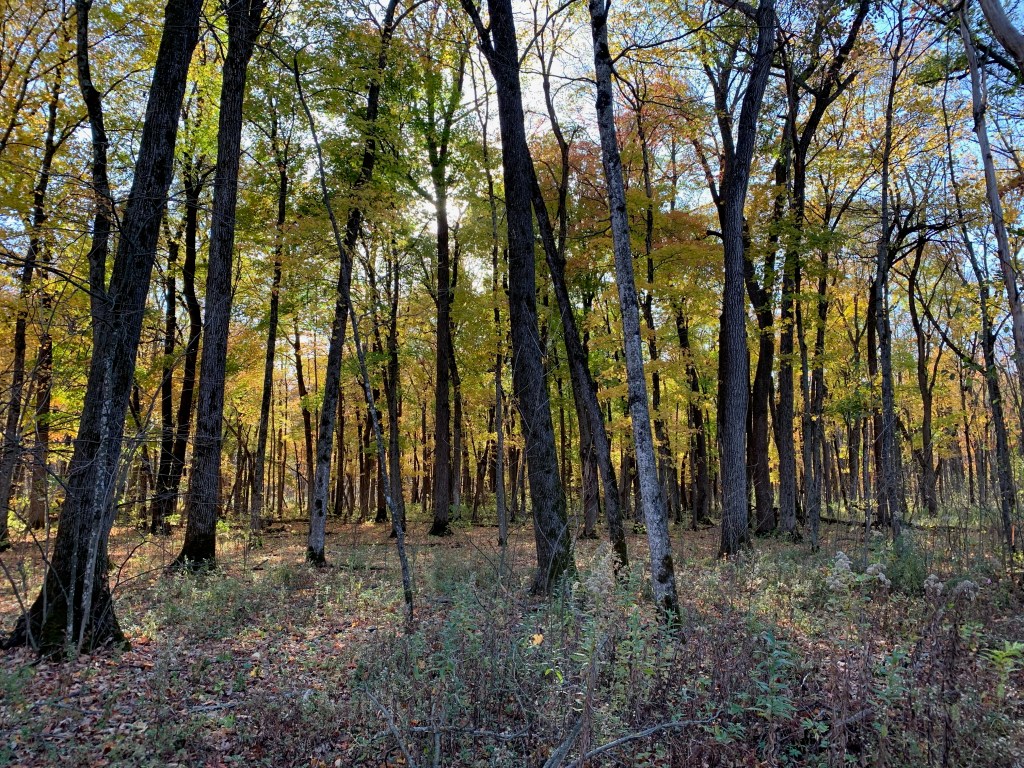

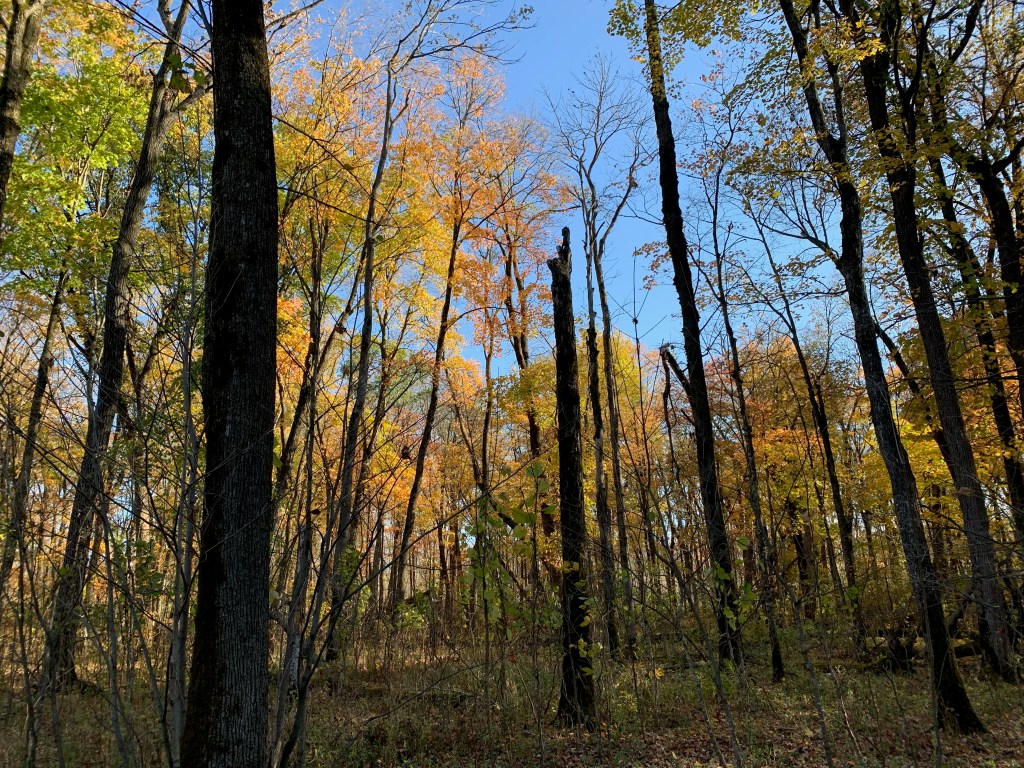
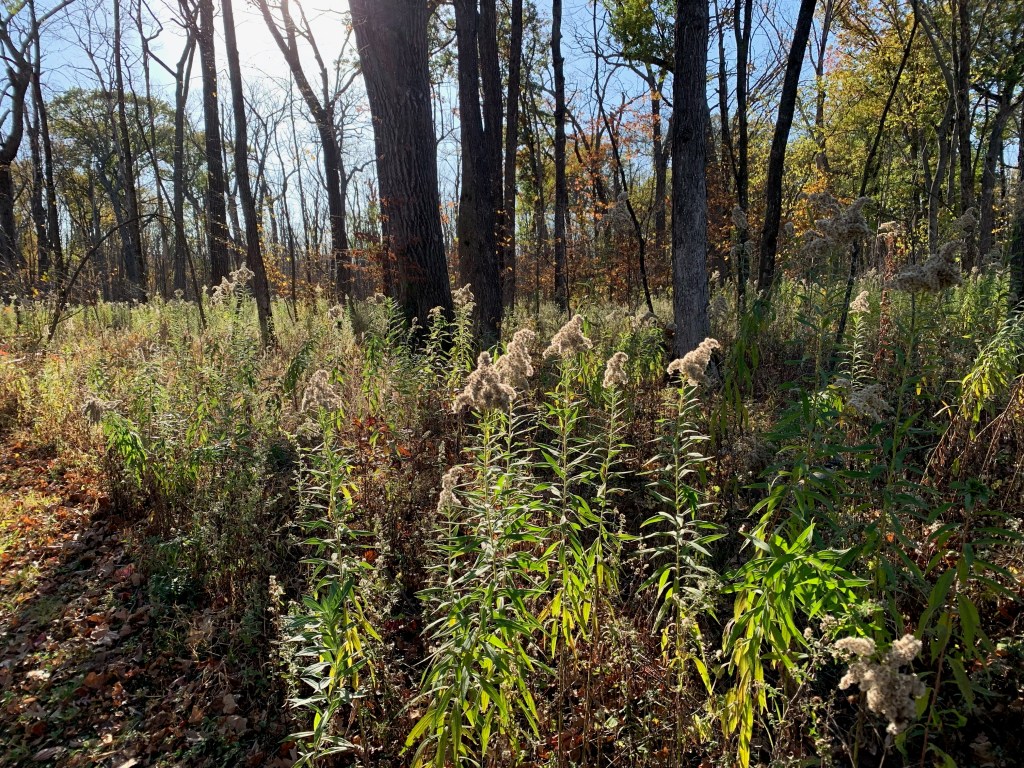
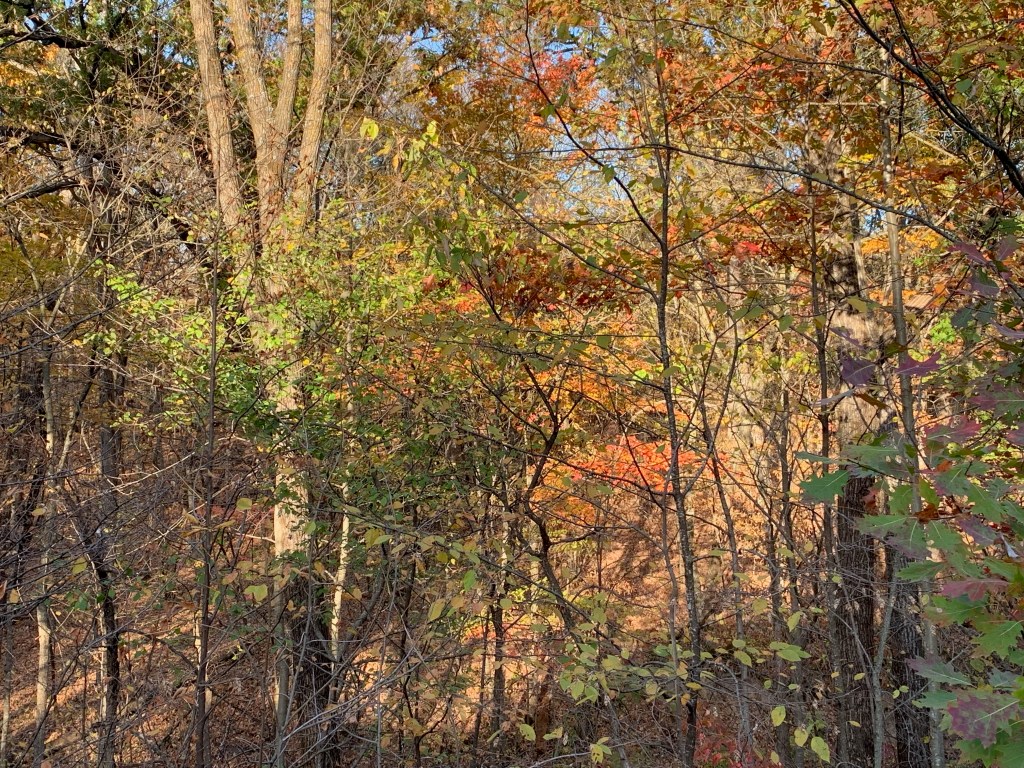
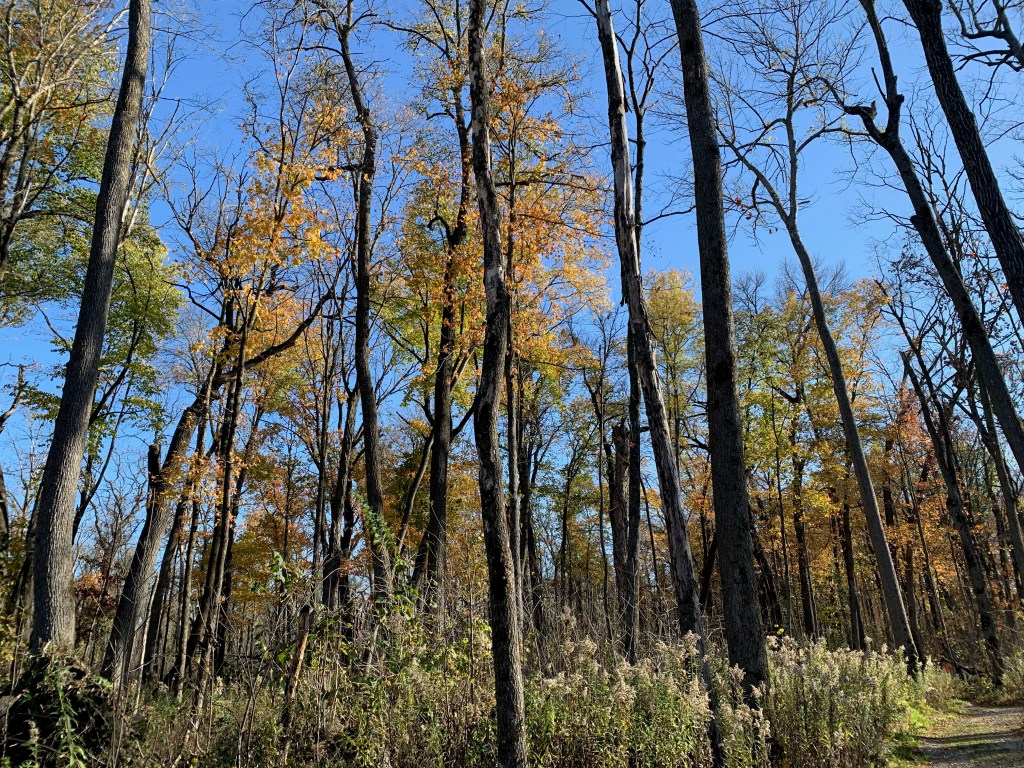
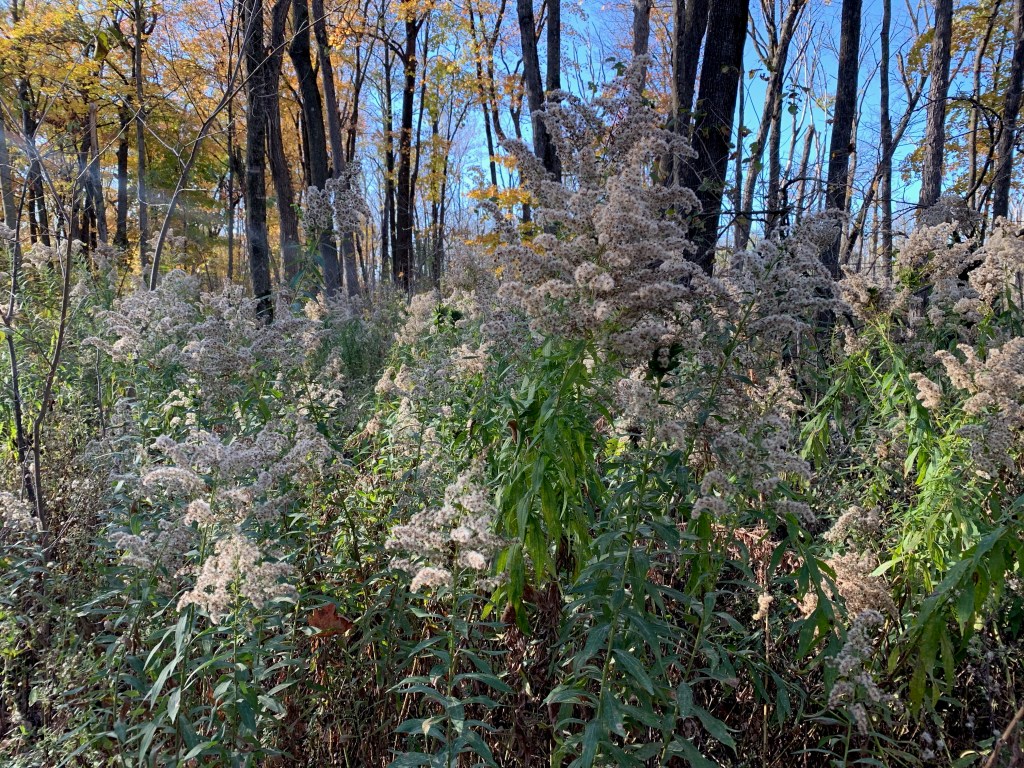

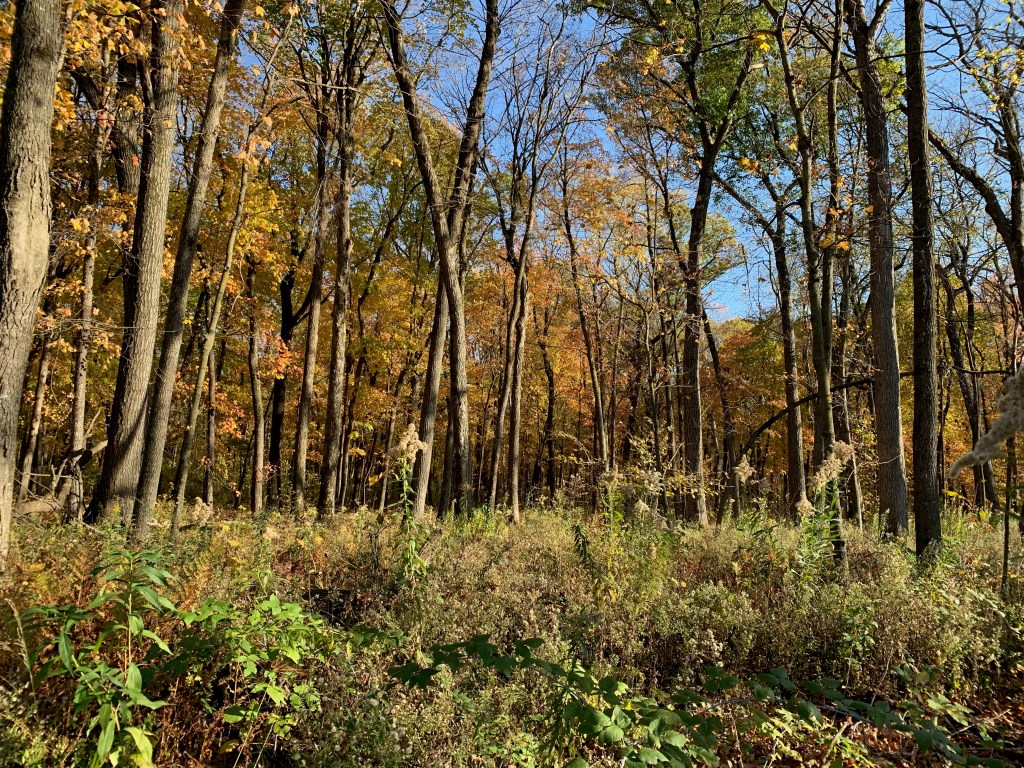
Fall in Minnesota. My walk in the woods. Click on image for larger view.
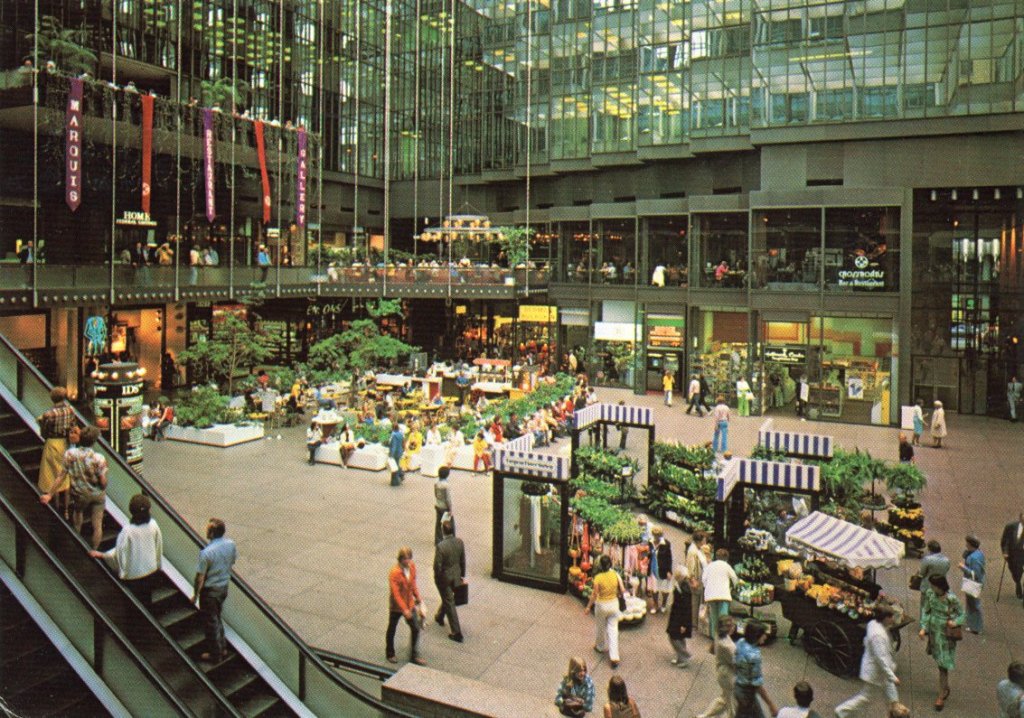
October, 1981
Dear
This is a picture of the place in downtown Minneapolis where everyone meets. Often there is an orchestra or bank concert – sometimes even the Minn. Symphony. It is always warm and cheery – even in midwinter!
I have just walked around the lake (2 hrs) and now must get supper for the family. Wish you were here.
Love
(aside) If you ever watched the Mary Tyler Moore Show, this is where she throws her hat in the are at the beginning. There is now a statue of her outside this building.
This tower is linked to other structures of the Center and the skyway system of pedestrian bridges. The Court soars 120 feet to the 80th story.

Mt. Ypsilon (13,307 ft.) and Mummy Range as seen from the High Drive in Rocky Mountain National Park.

Photo of our family business made into a postcard around 1942.

Pershing Square, Los Angeles
Postcard courtesy of Western Publishing and Novelty Company.
In 1866 the area known today as Pershing Square was dedicated as a public square called La Plaza Abaja (the lower plaza) by Mayor Christobal Aguilar. A year later people started calling it St Vincent’s Park since it was across the street from St Vincent’s College (now Loyola Marymount University). The name changed again in 1870 to Los Angeles Park and in 1886 it was 6th Street Park when it was redesigned by Frederick Eaton. It became Central Park during the early 1890s and had a bandstand pavilion.
In 1900 a statue of a Spanish-American War veteran was dedicated. In 1910 the park was renovated again by John Parkinson and featured a fountain by sculptor Johan Caspar Lachne Gruenfeld. In 1918, a week after the end of World War I, the park was renamed once again to Pershing Square to honor General Pershing. I believe this is the iteration pictured above.
The park went through many other iterations over the years including being demolished in 1952 in order to build an underground car park. By 1984 when the Summer Olympics were in Los Angeles, it had become so neglected, the city spent $1 million for temporary renovations.
Once again, in 1992, the park closed for a $14.5 redesign and renovation by Ricardo Legorreta and Laurie Olin. It re-opened in 1994 with a bell tower, fountains, a walkway, and concert stage. This design remains today. In 2000, a monument was dedicated to a highly decorated local Korean War veteran by the name of Eugene Obregon.
 Postcard Buzz